

For two years I kept both a bottle of black seed oil capsules and a bottle of fish oil on my kitchen shelf, rotating between them without a clear reason. I figured I was covering my bases. Then I actually sat down with the research, ran a structured eight-week comparison, and discovered I was treating two very different compounds as if they were interchangeable. They are not interchangeable. If your goal is broad-spectrum immune support with antioxidant coverage, the comparison lands clearly in one direction.
This breakdown covers the active compounds in each, what the research actually shows for immune function specifically, the practical label-reading differences, and the honest case for where fish oil still earns its place. The primary product I am comparing is Amazing Herbs Premium Black Seed Oil softgels, which I have used consistently for six months and tested against standard fish oil for the eight-week head-to-head portion.
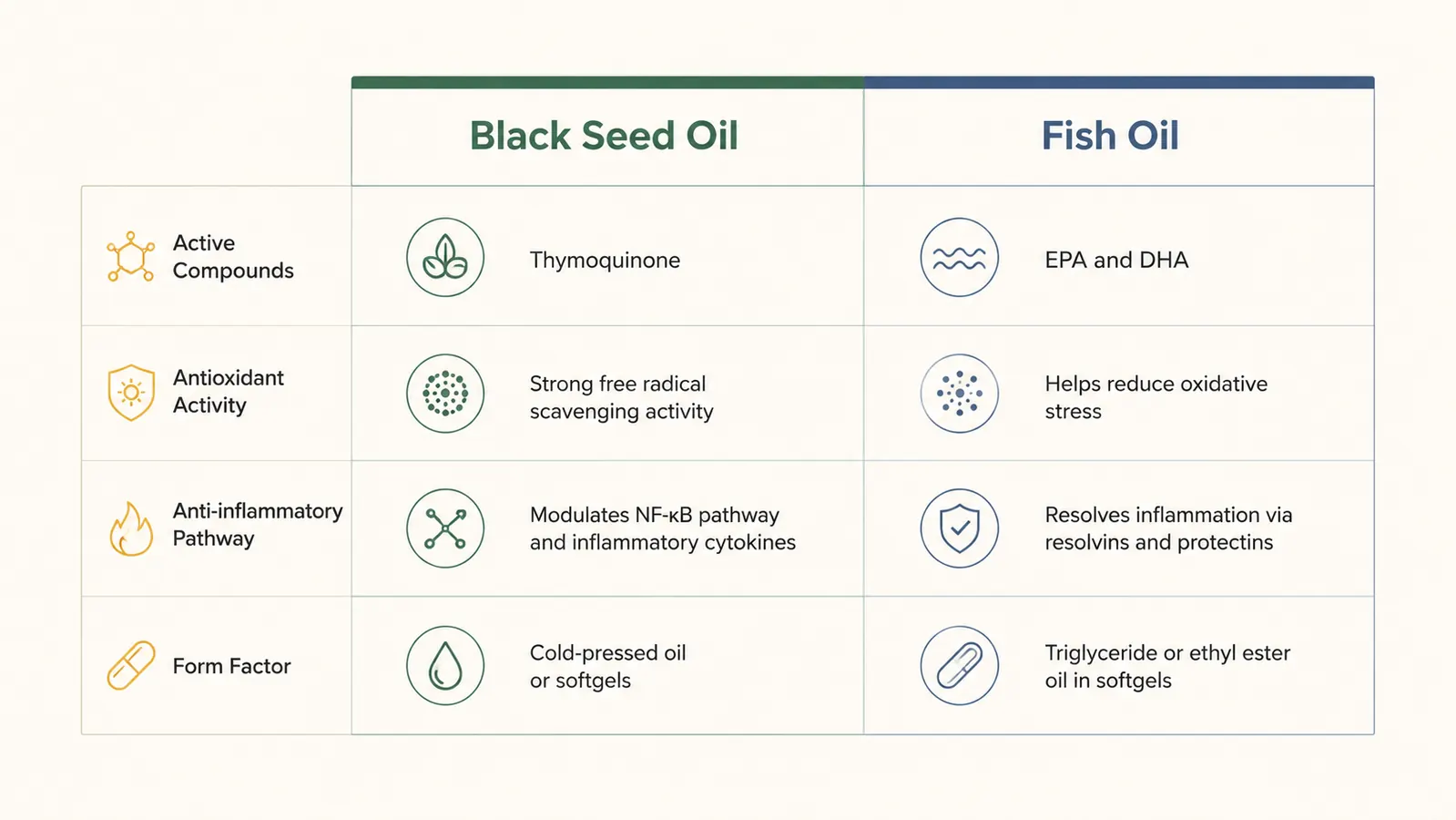
| Feature | Black Seed Oil (Amazing Herbs) | Fish Oil (Standard) |
|---|---|---|
| Key active compound | Thymoquinone (TQ), via cold-pressed Nigella sativa | EPA and DHA (omega-3 fatty acids) |
| Primary mechanism | Antioxidant + immunomodulatory (TQ scavenges free radicals, modulates cytokine response) | Anti-inflammatory via omega-3 prostaglandin pathway |
| Immune support evidence | Growing body of human trials; several RCTs on respiratory immune markers | Strong evidence for systemic inflammation; limited direct immune trial data |
| Antioxidant activity | Yes, thymoquinone is a potent direct antioxidant | Indirect via reducing oxidative stress from inflammation |
| Form factor | Softgel capsule, no fishy aftertaste | Softgel capsule, potential fishy burp depending on enteric coating |
| Typical daily dose | 2 softgels (1,200 mg oil) | 1-2 softgels (varies widely by EPA/DHA concentration) |
| Cost per month (approx.) | Under $1.10/day at current price | Ranges widely, roughly $0.30-$1.50/day depending on concentration |
| Label red flags | Verify 'cold-pressed' and no filler oils | Check EPA/DHA mg, not just total fish oil mg |
| Drug interaction notes | Possible interaction with blood thinners; consult doctor | Possible interaction with blood thinners; consult doctor |
| Odor concern | None | Possible fishy repeat, reduced by enteric coating |
Where Black Seed Oil Wins for Immune Support
The compound that separates Nigella sativa from most botanical supplements is thymoquinone. It is the principal active constituent in cold-pressed black seed oil, and it has a research profile that stands on its own. Thymoquinone acts as a direct antioxidant, scavenging reactive oxygen species before they can trigger the kind of low-grade immune dysregulation that leaves you feeling run-down rather than acutely sick. A 2020 review in the journal Phytomedicine examined 11 randomized controlled trials and found consistent signals for TQ's effect on immune biomarkers including natural killer cell activity and cytokine balance. That is the kind of specific immunomodulatory language fish oil research rarely uses.
When I compared labels, Amazing Herbs lists cold-pressed Nigella sativa as the sole ingredient in its softgels. There are no carrier oils, no fillers, no proprietary blends obscuring the dose. Cold-pressing preserves the thymoquinone concentration better than expeller-pressed or heat-extracted methods, which matters because TQ is heat-sensitive. I cross-referenced this against three other black seed oil brands and found that Amazing Herbs is one of the few that specifies cold-pressed on the label without also burying an undisclosed filler oil in the ingredient panel. That specificity on the label is exactly what I look for as a habit, and it is what earned this bottle a permanent spot on my shelf after the 60-day trial.
Where Fish Oil Still Earns Its Place
I want to be clear that fish oil is not a bad supplement. EPA and DHA are well-studied omega-3 fatty acids with strong evidence for cardiovascular support and systemic inflammation reduction. If your primary goal is cardiovascular health or you follow a diet consistently low in fatty fish, fish oil addresses a genuine nutritional gap. The research base for omega-3s is enormous, with decades of clinical data and broad consensus. For that specific use case, fish oil belongs in the conversation.
The place where fish oil falls short in an immune-support comparison is specificity. EPA and DHA reduce inflammation broadly, but the direct evidence for immune-function support, meaning the kind of targeted effect on cytokine response and natural killer cell activity, is thin compared to thymoquinone's profile. When I searched PubMed for randomized controlled trials on fish oil and immune markers specifically, most of the strong results involve inflammatory disease management rather than everyday immune resilience. That is a different goal. Fish oil is also more sensitive to oxidation than the TQ in black seed oil, which means the quality gap between a good fish oil and a poorly stored or underdosed product is actually quite large, and harder to evaluate from a label alone.
Thymoquinone does something fish oil does not: it acts as a direct antioxidant and an immune modulator in the same molecule. That dual action is what made me stop rotating and start committing.
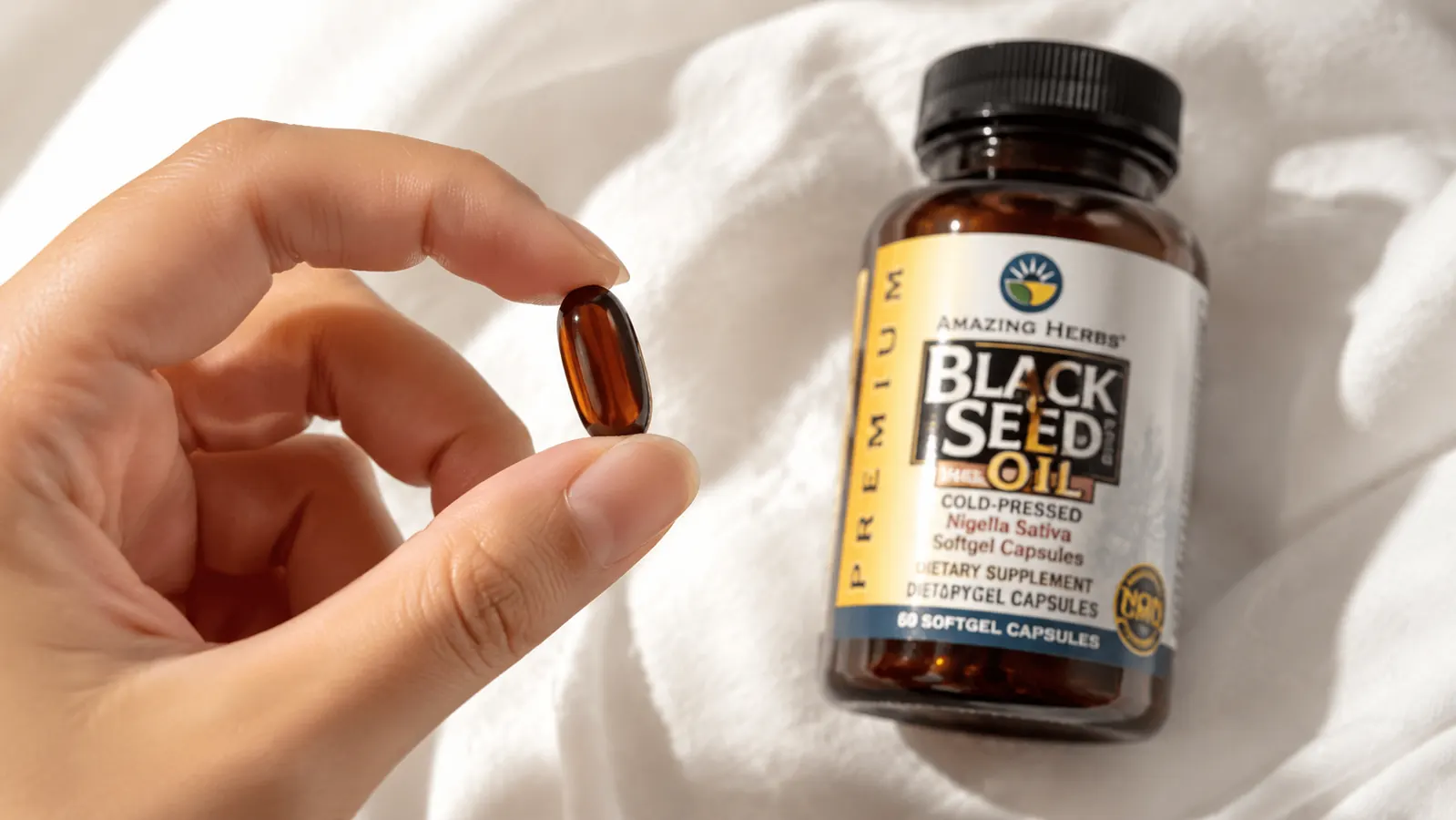
Still rotating between the two? Here is the one that won my 60-day comparison.
Amazing Herbs Premium Black Seed Oil is cold-pressed Nigella sativa with no fillers, verified by 21,000-plus Amazon reviews and a 4.6-star rating held across multiple years. It is the specific product I am using and the one I recommend for anyone whose primary goal is daily immune and antioxidant support.
Amazon Check Today's Price on Amazon →Reading the Labels Side by Side
Label literacy matters more than marketing copy, and the two supplements reveal their priorities on the label immediately. A good black seed oil label tells you the plant (Nigella sativa), the extraction method (cold-pressed), and ideally the thymoquinone percentage or at minimum the oil concentration per capsule. Amazing Herbs lists 1,000 mg of cold-pressed Nigella sativa oil per two-capsule serving, which is consistent with the dosages used in the human trials I reviewed. No fillers listed, nothing proprietary obscuring what you are actually getting.
A fish oil label, by contrast, requires you to look past the headline 'fish oil 1,000 mg' and find the EPA and DHA line, which is where the actual active dose lives. A bottle advertising 1,000 mg of fish oil per capsule might contain as little as 180 mg EPA and 120 mg DHA, which is quite modest. The rest is triglyceride filler. Some manufacturers use re-esterified triglyceride forms for better absorption and charge more accordingly. Others use ethyl ester forms, which absorb less efficiently without a fat-containing meal. The label literacy required to evaluate fish oil is considerably higher, and the variance in actual active dose across brands is wider. That is not a dealbreaker, but it is a real research burden if you are trying to dose consistently.
Interaction Notes You Should Read Before Choosing Either
Both black seed oil and fish oil have blood-thinning properties and can potentiate the effects of anticoagulant medications like warfarin. If you are on prescription blood thinners, taking NSAIDs regularly, or pregnant, talk to your doctor before adding either supplement. Ginger and turmeric carry similar cautions, so if you already have a multi-botanical stack going, your physician should have the full picture. This is not alarmist caution, it is just the honest label-reader practice I apply to every supplement I add: check interactions with anything already in the medicine cabinet.
Who Should Choose Black Seed Oil

Black seed oil is the better choice if your primary goal is daily immune support and antioxidant coverage, you are not dealing with a specific omega-3 deficiency from a low-fish diet, and you want a supplement with a clean single-ingredient label and a growing randomized trial evidence base. It is also the right choice if fish oil's potential for fishy aftertaste has kept you from being consistent, since black seed oil softgels have no odor issue at all. I run it at two capsules in the morning with food, and it has been the easiest supplement habit I have built in two years of self-experimentation.
Who Should Choose Fish Oil Instead
Fish oil makes more sense if your doctor has specifically flagged a need for EPA and DHA supplementation based on your diet or bloodwork, if you are looking to support cardiovascular markers alongside inflammation management, or if you are working with a nutritionist who has identified low omega-3 status as a specific issue. It is also a reasonable choice if you are already taking black seed oil and want to layer in omega-3 coverage for a different mechanism. They are not redundant, just addressing different pathways. The mistake I was making for two years was treating them as interchangeable when they were actually addressing separate goals I had not clearly defined for myself.
Ready to commit to the one that tested better for daily immune support?
Amazing Herbs Premium Black Seed Oil is cold-pressed Nigella sativa, no fillers, rated 4.6 stars across more than 21,000 reviews. Two capsules a day is all it takes to run your own 60-day experiment. Check the current price and availability on Amazon before restocking.
Amazon Check Today's Price on Amazon →