
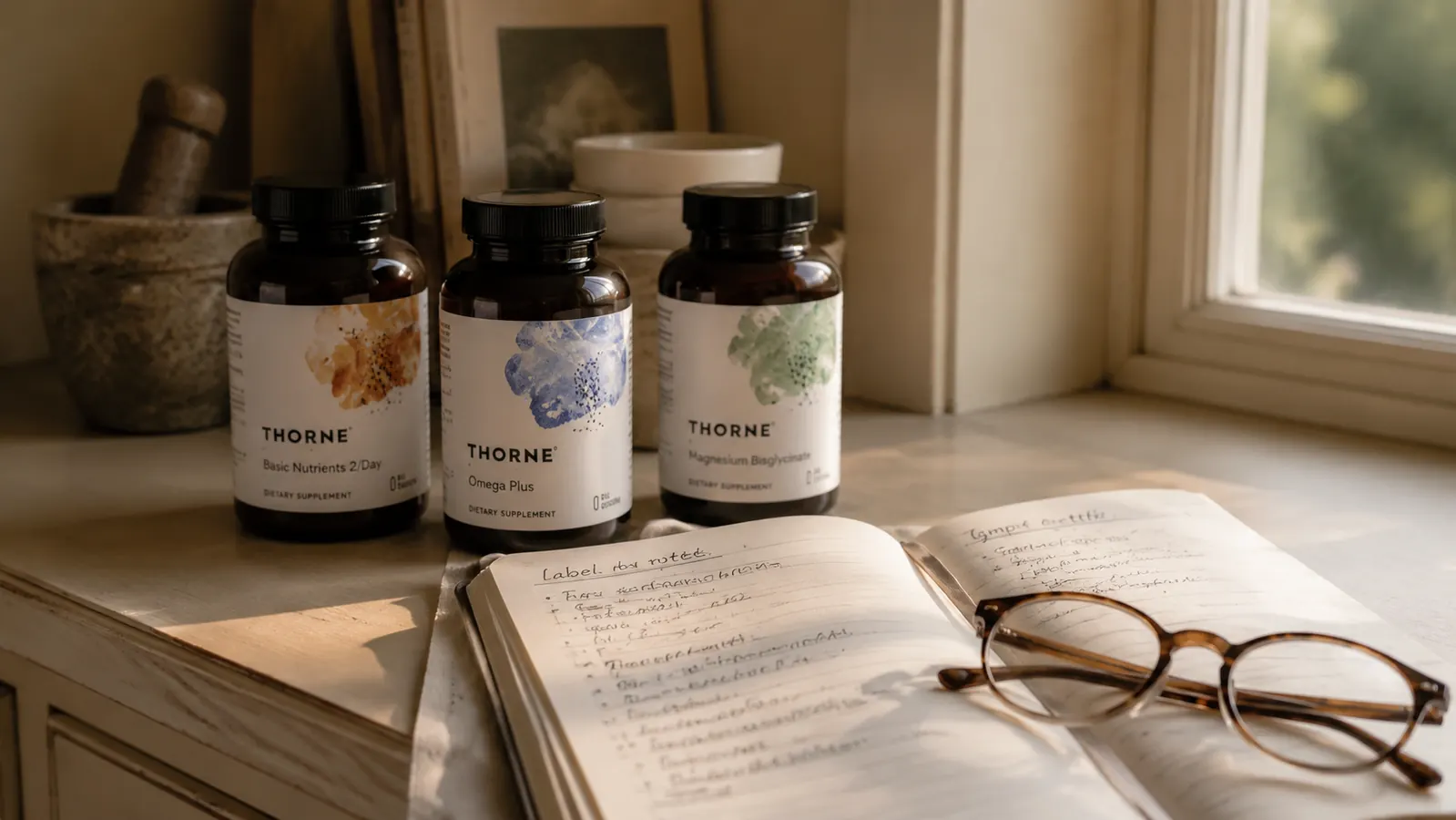
Here is a problem that took me three failed supplement purchases to understand: the milligram number on the front of a turmeric bottle tells you almost nothing useful. A bottle that says 1,000mg turmeric could be delivering as little as 30mg of curcumin, because most of that weight is inert plant fiber, not the active curcuminoid compounds you are actually after. I spent months drinking turmeric lattes and swallowing cheap capsules before I learned to read the label the way it needs to be read. This checklist is what I wish someone had handed me at the beginning.
The good news is that the supplement industry does give you enough information on the label to make a genuinely informed decision. You just need to know which five numbers and phrases actually matter. If a bottle passes all five, it has earned a spot on your shelf. If it fails even one, set it back down.
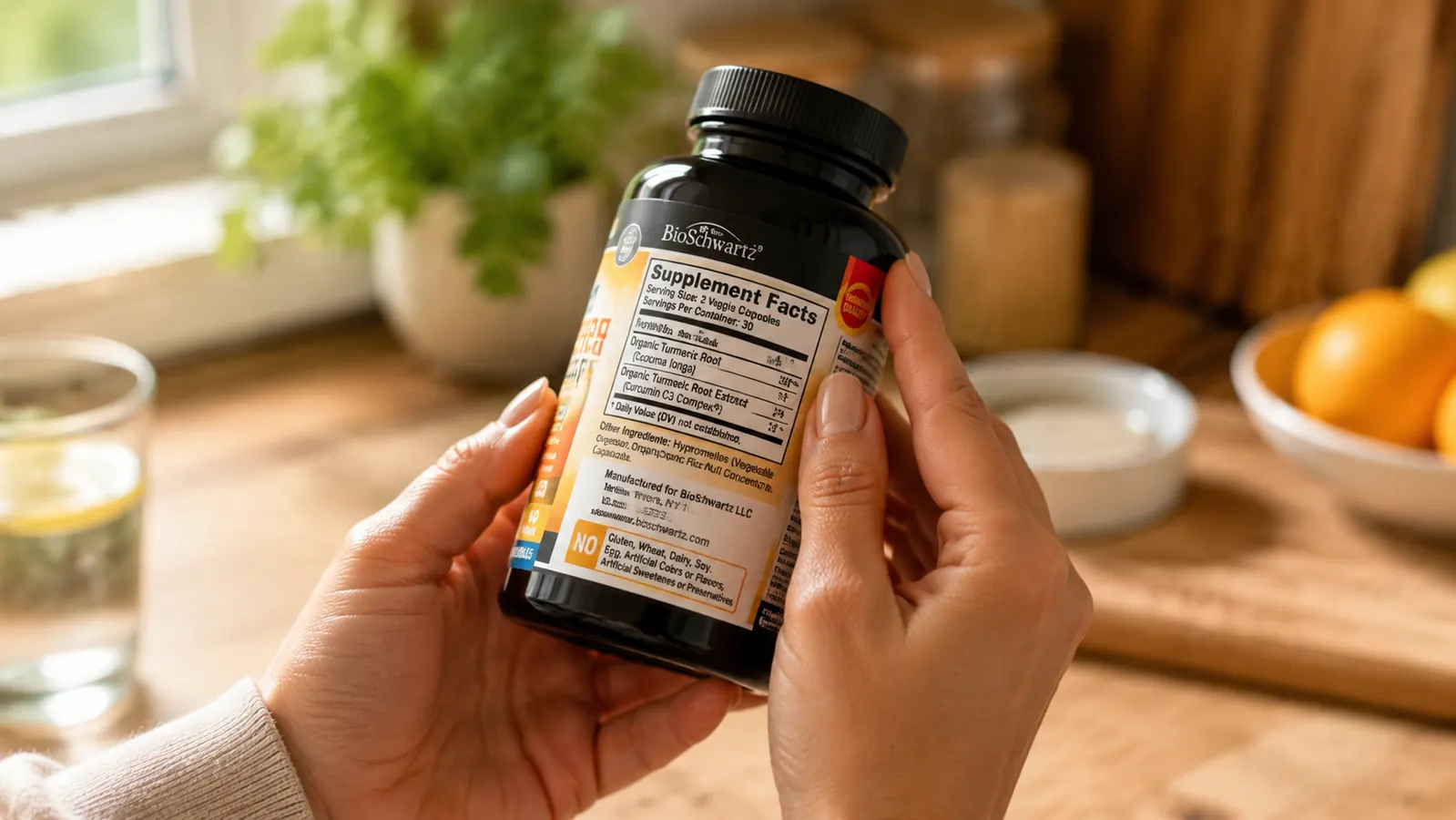
If you want a formula that already passes all five steps, BioSchwartz Turmeric Curcumin 1500mg with BioPerine is the one I keep coming back to.
It hits 95% standardized curcuminoids, includes 10mg of BioPerine black pepper extract per serving, and carries more than 103,000 Amazon reviews at 4.5 stars. It is a useful benchmark whether you buy it or use it to compare everything else.
Amazon Check Today's Price on Amazon →Step 1: Find the Curcuminoid Percentage, Not Just the Milligram Weight
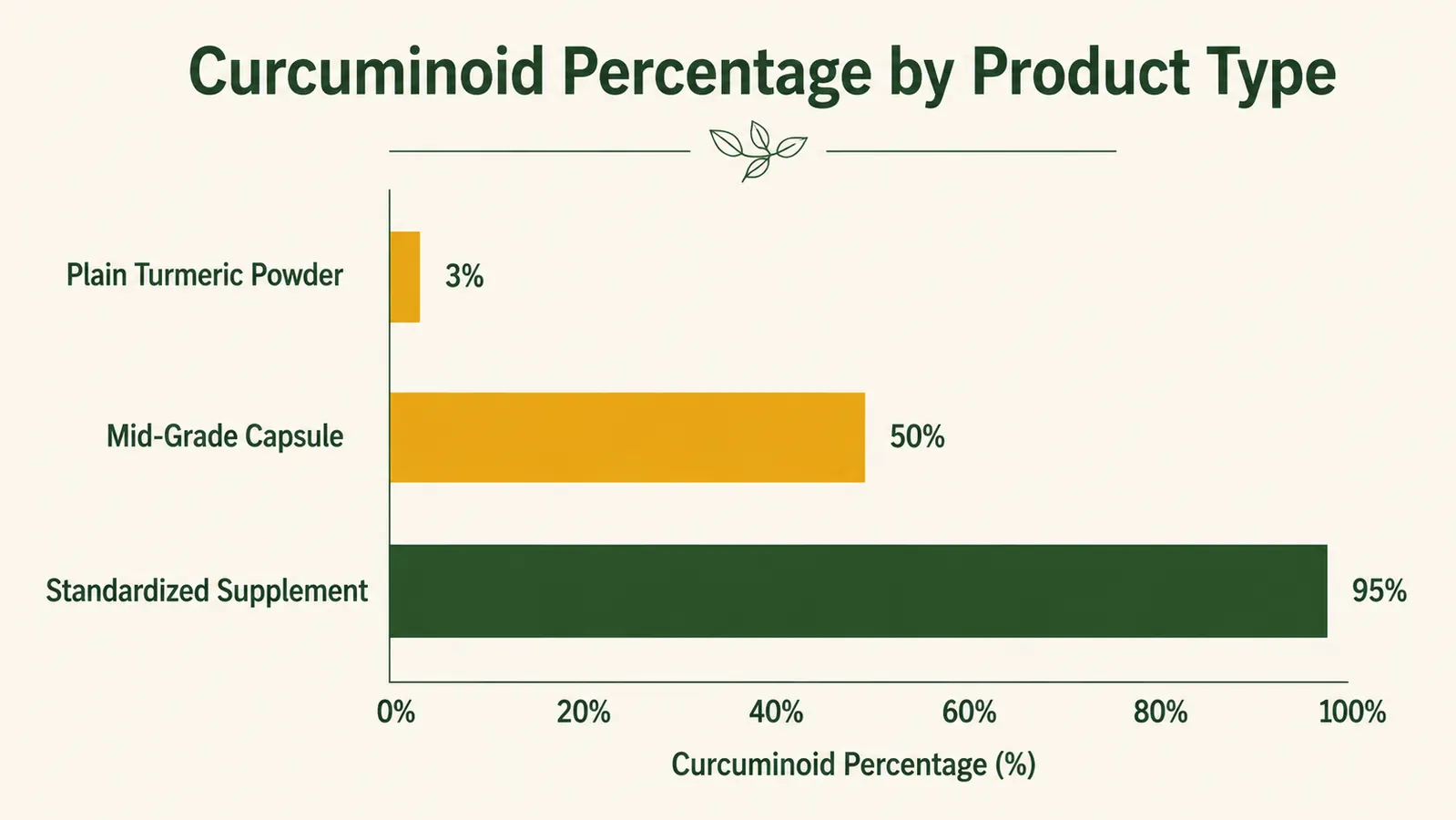
The front of the bottle says turmeric. The Supplement Facts panel on the back is where the real information lives. Look for a line that reads something like 'Turmeric Root Extract (standardized to 95% curcuminoids).' That 95% figure is the one that matters. It tells you what fraction of the extract weight is made up of active curcumin compounds, specifically the three curcuminoids: curcumin, bisdemethoxycurcumin, and demethoxycurcumin.
Plain turmeric root powder contains roughly 2-5% curcuminoids by weight. A supplement standardized to 95% has concentrated the extract to roughly 20 times that potency. If the label does not say 'standardized' and does not give a curcuminoid percentage, assume you are buying ground-up turmeric root at supplement margins. That is not necessarily wrong if you want the whole root, but it is not what the research on curcumin is built around.
The practical minimum I look for is 95% curcuminoids in the extract, with a per-serving total that works out to at least 500mg of actual curcuminoids. At 1500mg of a 95%-standardized extract, BioSchwartz delivers roughly 1425mg of curcuminoids per three-capsule serving, which is well inside the range used in most human studies.
Step 2: Check for BioPerine or Piperine, and Verify the Dose
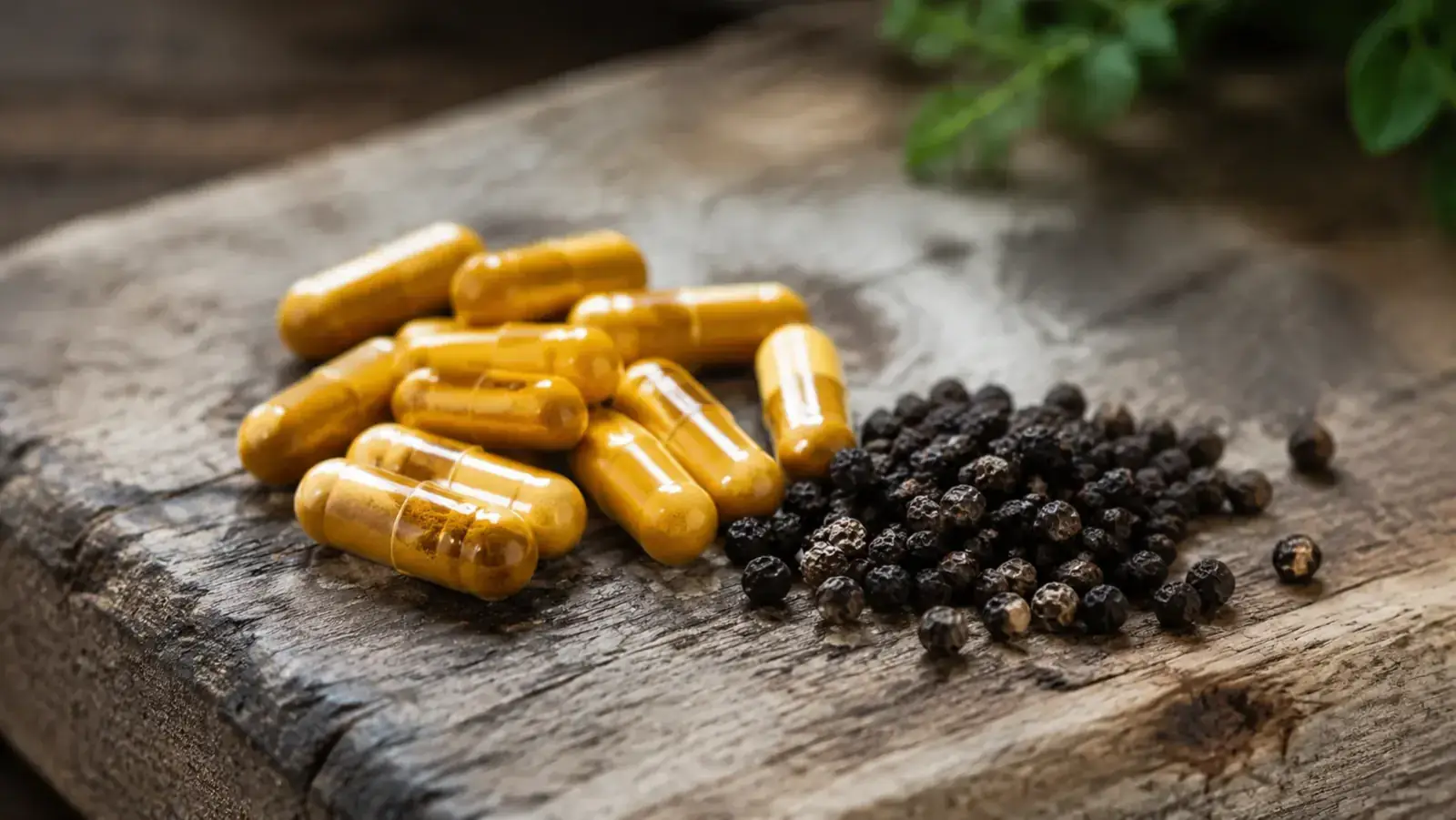
Curcumin has a well-documented absorption problem. It is fat-soluble and poorly taken up in the gut on its own. A 1998 study published in Planta Medica found that combining curcumin with piperine, the active compound in black pepper, increased curcumin bioavailability by 2,000% in humans. That number is cited constantly in supplement marketing, and for once the marketing is not overstating the research.
BioPerine is a patented, standardized piperine extract made by Sabinsa Corporation. It is the form used in most of the bioavailability research. When you see BioPerine on a label, it tells you the manufacturer used the specific, tested ingredient rather than a cheaper bulk black pepper powder of uncertain potency. The dose should be at least 5mg per serving. Anything lower is mostly window dressing. A dose of 10mg is common in well-formulated products and is the amount I prefer to see.
One note if you are on medications: piperine inhibits cytochrome P450 enzymes in the liver, which your body uses to process many drugs. If you take a blood thinner, a statin, or any prescription medication, talk to your doctor before adding a high-piperine supplement to your daily routine. This is not a reason to avoid turmeric supplements, but it is a reason to have a quick conversation first.
Step 3: Look for Third-Party Testing or a USP/NSF Certification
The FDA does not evaluate supplements before they go to market the way it does pharmaceuticals. That means a brand can print any number on its label and ship the product without independent verification. Third-party testing fills that gap. Look for any of the following on the bottle or the brand's website: USP Verified, NSF Certified, Informed Sport, or a statement that the product is tested at an ISO-certified laboratory.
The absence of a seal does not mean a product is bad. Many solid smaller brands do third-party test but do not carry the formal certification because the licensing fees are high. In that case, look for brands that publish their certificates of analysis (COAs) on their website, or that manufacture in FDA-registered, GMP-certified facilities. GMP stands for Good Manufacturing Practices, and it means the facility follows specific protocols for ingredient verification, cleanliness, and batch consistency.
BioSchwartz makes GMP compliance a visible part of their positioning, which is the minimum I want to see from any brand. If a label has no quality language at all, that omission is itself a data point.
Step 4: Choose Capsules Over Gummies for This Particular Supplement
Gummies have real advantages for vitamins like D3, B12, and melatonin, where the doses are small and the formats work naturally. Turmeric is a trickier case. The effective dose of standardized curcumin extract is typically in the 500-1500mg range per day. Packing that into a gummy format requires either a very large serving (sometimes four to six gummies) or a significantly reduced dose per piece, often without BioPerine because piperine has a pronounced bitter taste that is hard to mask in a chewy format.
I have looked at several turmeric gummy products on Amazon and the pattern is consistent: the curcuminoid dose per serving is lower, the BioPerine is absent or minimal, and the sugar content adds up if you are taking them daily. For a fat-soluble compound where absorption cofactors genuinely matter, capsules are the more reliable delivery method. If you are committed to gummies, at minimum verify the curcuminoid percentage and confirm that some form of absorption enhancer is present.
For anyone with digestive sensitivity, capsules also allow for easy dose splitting. You can start with one capsule and work up, which is harder to do with gummies sold in predetermined serving sizes.
Step 5: Match the Dose to Your Intention and Know the Contraindications
The research on curcumin covers a wide range of doses, from 500mg per day to 8,000mg per day in some clinical trials. For general antioxidant support and everyday wellness, 500-1500mg of standardized extract per day is the range most commonly studied in healthy adults. That is also the range where well-designed supplements like BioSchwartz are positioned. Three capsules at 500mg each gets you to 1500mg, which matches the label.
There are three specific situations where you should talk to your doctor before starting any turmeric curcumin supplement, regardless of brand. First, blood thinners: curcumin has mild blood-thinning properties of its own, and combining it with warfarin, aspirin, or other anticoagulants can increase bleeding risk. Second, gallbladder issues: curcumin stimulates bile production, which is helpful for digestion but problematic if you have gallstones or a bile duct obstruction. Third, pregnancy: high-dose curcumin supplements have not been established as safe during pregnancy, and the stimulating effect on the uterus is a known concern at supplemental doses.
None of this is a reason to avoid turmeric. It is a reason to treat it like any bioactive compound and make an informed decision. For the large majority of healthy adults, a 1500mg standardized curcuminoid supplement with 10mg BioPerine, taken with food, is a reasonable and well-tolerated daily addition.
The milligram number on the front of the bottle is the least useful piece of information on the label. The curcuminoid percentage and the BioPerine dose are the two numbers that actually tell you what you are buying.
What Else Helps
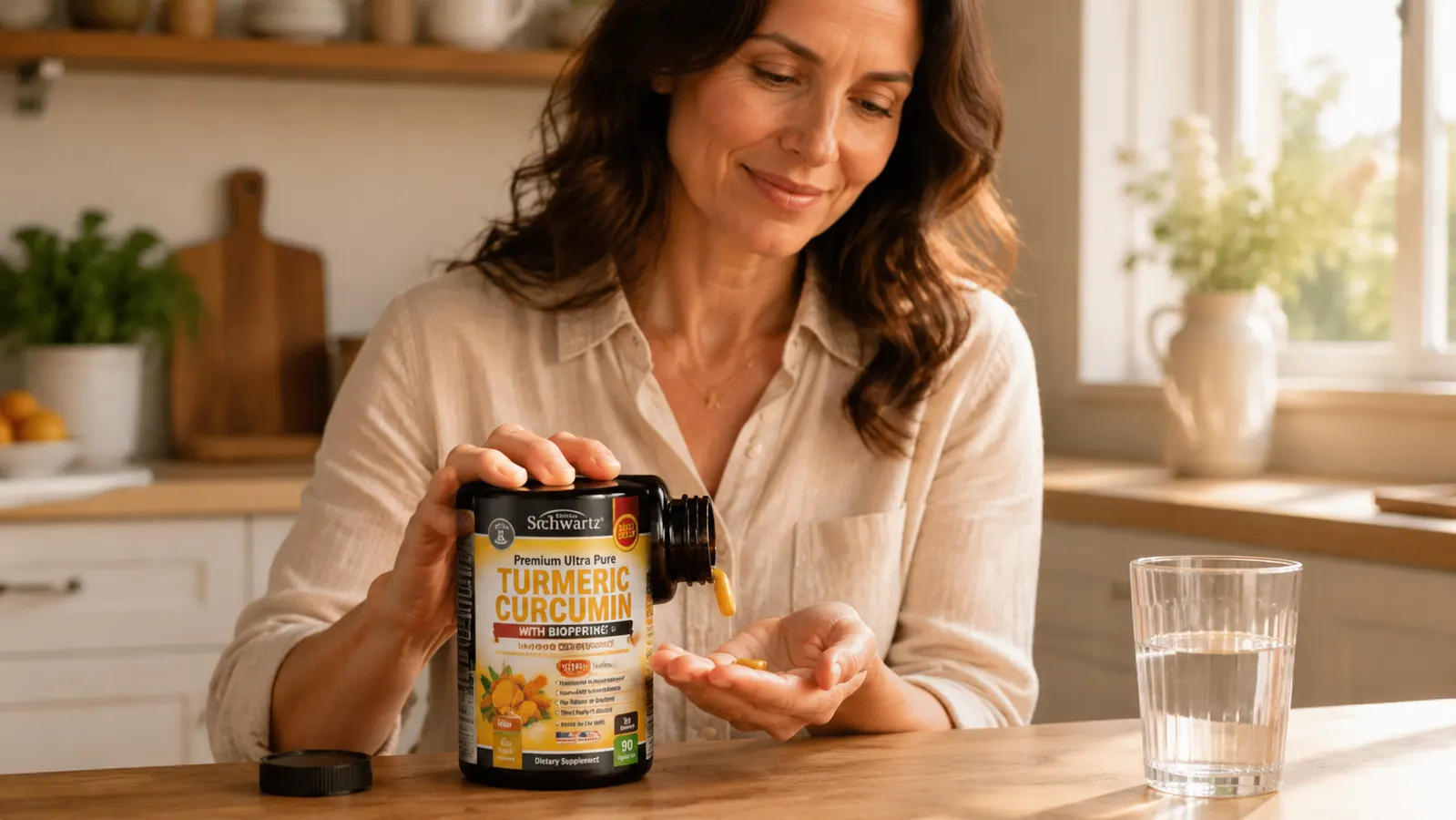
Beyond the label, two practical habits make a real difference in how well a turmeric supplement works. First, take it with food that contains fat. Curcumin is fat-soluble, so a meal with even a small amount of dietary fat, avocado, nuts, olive oil, eggs, helps with uptake alongside the BioPerine. Second, be consistent. The studies that show meaningful results from curcumin are generally measuring outcomes over eight to twelve weeks of daily use, not a few days. This is a shelf supplement, not a one-time intervention. The people who get the most out of it are the ones who take it every day with a meal and track how they feel over 60 to 90 days.
If you want a deeper look at what a 95% standardized formula with BioPerine actually feels like after six months of daily use, I tracked that experience in detail in my long-term review. And if you are still weighing whether curcumin fits your supplement priorities, the breakdown of ten specific reasons researchers keep returning to this compound is a useful read before you commit to a bottle.
The supplement aisle, both in stores and online, is full of turmeric products that pass the front-of-label test and fail the Supplement Facts test. Running five quick checks before you add anything to your cart takes about ninety seconds and separates a product that earns shelf space from one that does not. The checklist is not complicated. The brands that want your business know about it too, which is why the good ones make the answers easy to find.
BioSchwartz passes all five steps, and 103,000-plus reviewers have put it through the long-term test.
If you want a formula that hits 95% standardized curcuminoids, includes the research-backed 10mg BioPerine dose, and is made in a GMP-certified facility, this is the benchmark I keep returning to when I want something to compare everything else against.
Amazon Check Today's Price on Amazon →