
I did not intend to spend a Saturday afternoon reading ginger research. I was looking up whether fresh ginger in smoothies actually does anything measurable, and one PubMed link led to another, and two hours later I had three browser tabs open and a sticky note that said 'gingerol bioavailability?' sitting next to my keyboard. That is how most things end up on my supplement shelf. Not a recommendation from a friend. Not an Instagram ad. Just me, a rabbit hole, and a notebook.
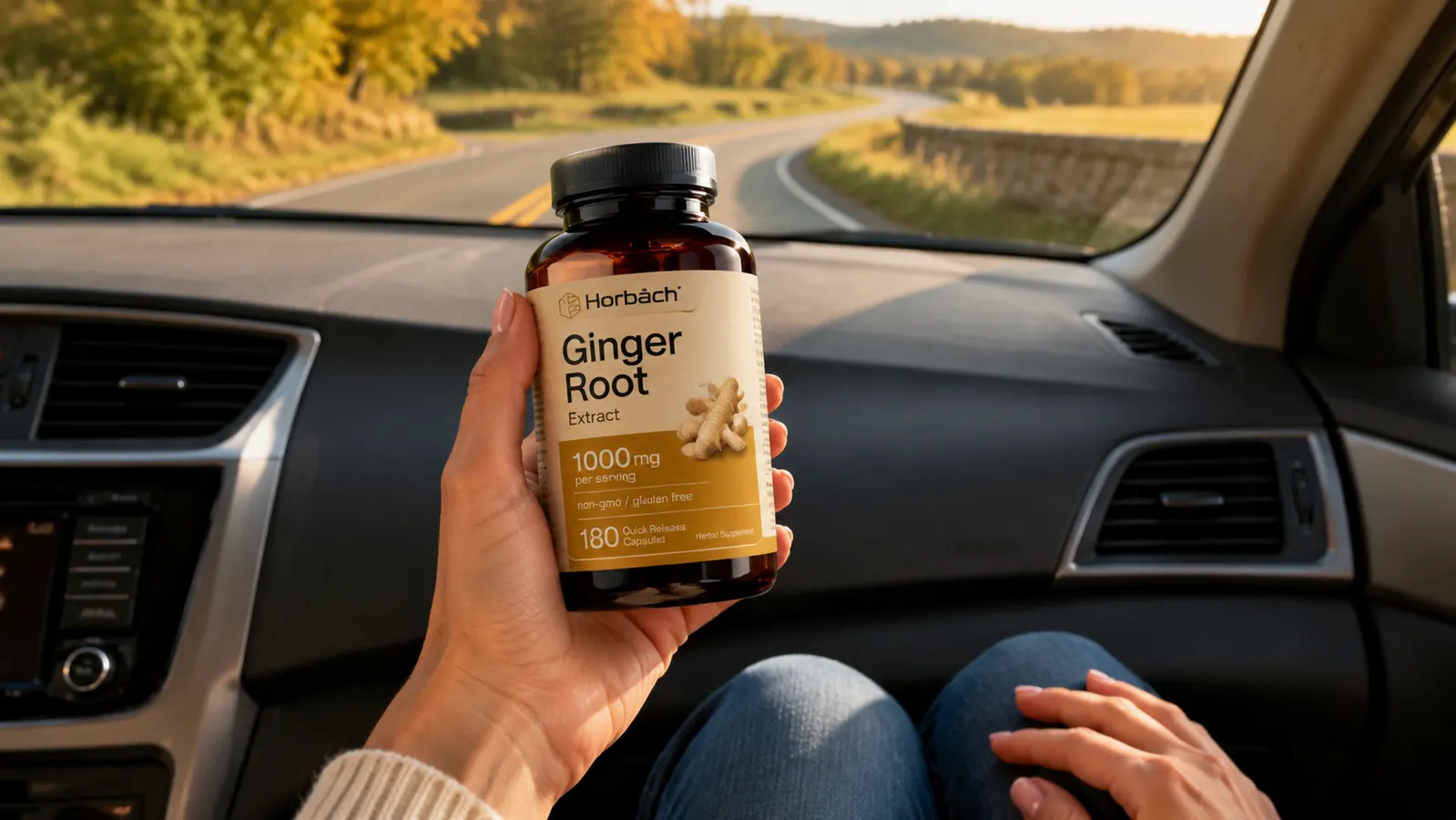
What I kept bumping into in those studies was gingerol, which is the primary active compound in raw ginger root, and its heat-converted cousin shogaol. The research on both for digestive support, including occasional nausea and motion-related stomach discomfort, was more consistent than I expected. Consistent enough that I closed the laptop and ordered a bottle of Horbaach Ginger Root Extract that evening. It was under ten dollars for 150 capsules. At that price point, I figured a 60-day trial cost me less than a bad lunch.
I had a three-hour drive through winding Tennessee highway curves coming up in two weeks. That felt like a useful real-world test.
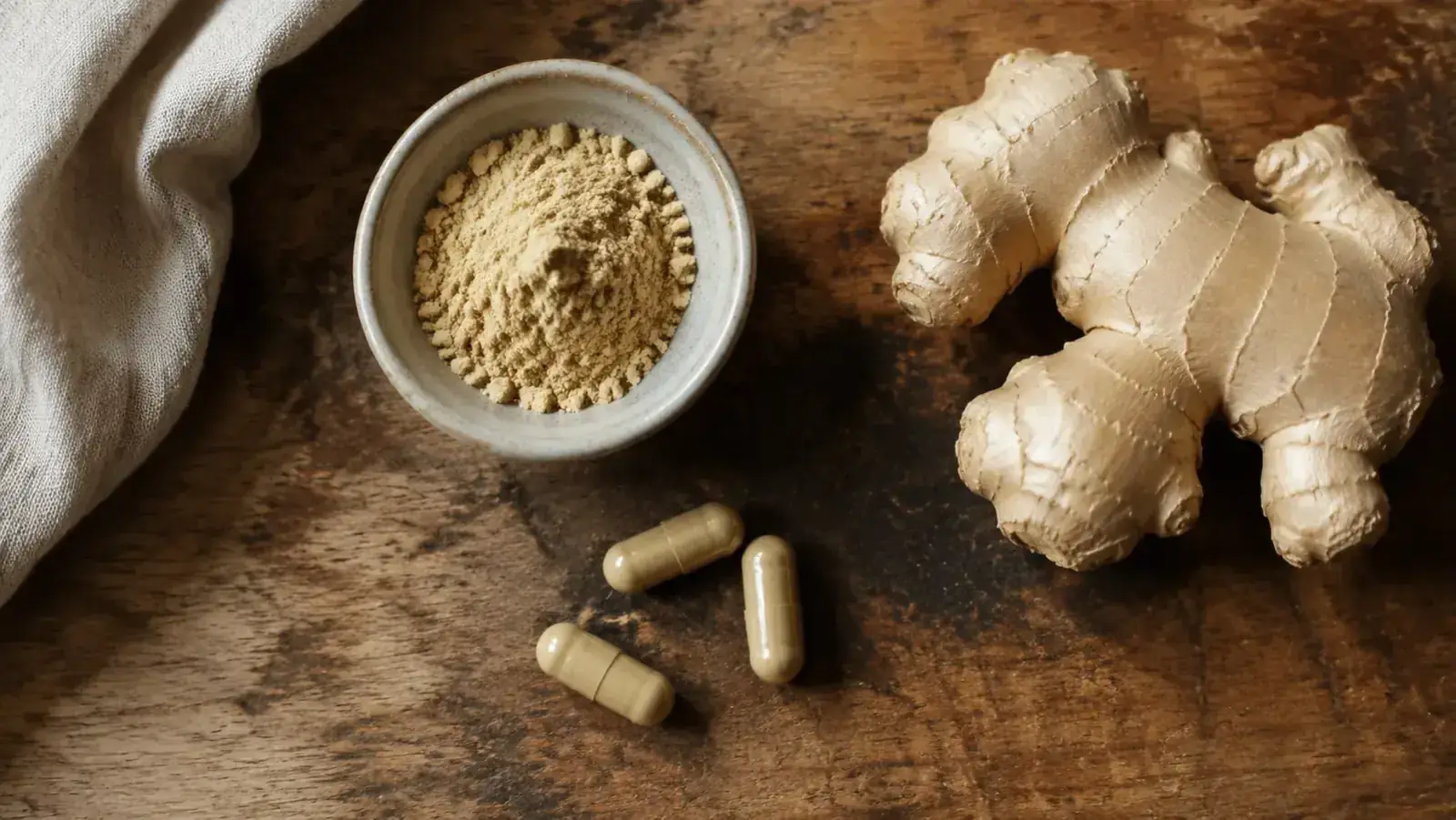
I want to be clear about what I was testing. Ginger root extract is not a medication. It does not treat or prevent motion sickness in any clinically approved sense. What the research suggests is that ginger may help support a settled stomach in situations where motion tends to create discomfort for some people. That framing matters to me. I am not a practitioner, and I am not making any claims. I was simply curious whether a well-studied botanical with a centuries-long traditional use history might help my stomach feel less aggravated on a curvy drive.
The drive happened on a Tuesday in late March. Eighteen miles of two-lane curves through the hills east of Nashville, then onto the interstate. I took two Horbaach capsules about 45 minutes before getting in the car, which is the timing most studies use for pre-administration. I did not take Dramamine, which I had been keeping in the glovebox for exactly this kind of route. My usual experience on that stretch is a low-grade queasiness that fades once I hit the flat interstate. Not debilitating, but distracting. The kind that makes me roll the window down in February.
I noticed on that drive that I did not reach for the window handle. That is all I will say with any confidence, because it was one drive, not a double-blind trial. But I noticed it. And I took notes.
If you read labels before you buy, Horbaach's ginger root capsules are worth the five minutes.
Non-GMO, gluten free, 150 capsules per bottle, and the price per serving is low enough that a 60-day experiment does not feel like a gamble. Check current pricing on Amazon before you decide.
Amazon Check Today's Price on Amazon →I kept taking one capsule a day after that, with my morning tea, and tracked how my stomach felt on three more drives over the following month. One was a ferry crossing on a choppy day in April, which historically has been unpleasant enough that I usually skip the outdoor deck entirely. I did not skip the deck that day. Again: one data point. But it went into the notebook.
What I also noticed over those 60 days is that the capsule became easy to remember because it paired naturally with breakfast. That is a thing I have learned about myself: timing matters more than intention when it comes to consistency. I can intend to take something every day and forget it in a drawer within two weeks. Attach it to something I already do, like putting the kettle on, and it sticks. The Horbaach bottle now lives next to my turmeric capsules on the small shelf above the coffee maker. It has been there since April.
What I Would Tell You If We Were Sitting at My Kitchen Table

Here is the honest version. Ginger root extract is not a magic fix for anyone who gets severely motion sick or has significant nausea issues. If that describes you, you need an actual conversation with your doctor, particularly if you take blood thinners or are pregnant, because ginger has real interactions worth discussing. I am serious about that.
But if you are like me, someone whose stomach gets a little cranky on winding roads or choppy water, and you have been reaching for an over-the-counter option out of habit rather than necessity, then a standardized ginger root extract capsule might be worth testing on your own. The research is genuinely interesting. The price is genuinely low. The downside risk is minimal if you are otherwise healthy. And the worst that happens is you learn something about how your body responds to gingerol, which is more than you knew before.
I still keep the Dramamine in the glovebox. I have not opened it since March. That is the most honest thing I can tell you.
If you want to go deeper on what is actually in the Horbaach bottle and how it compares to other ginger extract formats, I wrote a full label breakdown in my longer review. And if you are thinking about building a more complete digestive support routine around ginger, there is a practical guide for that too.
The bottle I have been reaching for instead of Dramamine on winding roads.
Horbaach Ginger Root Extract, 150 capsules, Non-GMO, gluten free. At the current price per serving, a 60-day personal experiment is genuinely low-stakes. Worth a look if you are a road-tripper who takes their stomach seriously.
Amazon Check Today's Price on Amazon →