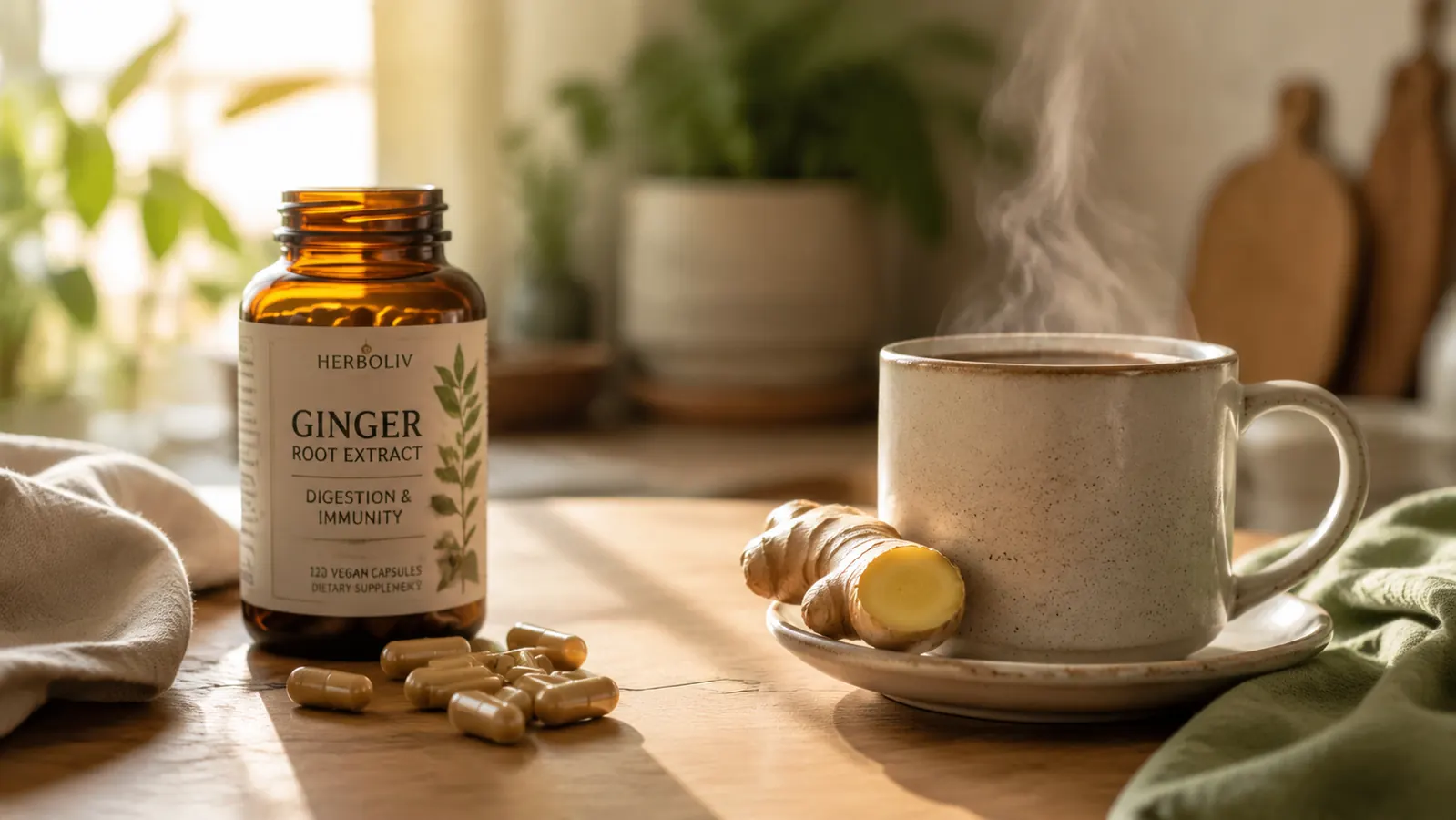
When I started tracking my digestive habits in a notebook two years ago, ginger was the first thing I reached for. Not capsules, not a tincture. A thick slice of fresh root dropped into hot water every morning. It felt intentional. Grounding. Very much like something my grandmother would have approved of. The problem was consistency. Some mornings I had time for the ritual. Most mornings I did not. And on the mornings I skipped, nothing was getting into my system.
That friction is the crux of this comparison. Ginger tea and ginger root capsules both start from the same rhizome, Zingiber officinale, and both deliver gingerols and shogaols, the bioactive compounds that show up in digestive-support research. But what you actually get per serving, how reliably you get it, and whether the form fits your life on a random Wednesday morning are separate questions. I've spent three months running both options side by side, and here's what the comparison actually looks like.
| Factor | Horbaach Capsules (B07Z9P38D1) | Fresh-Brewed Ginger Tea |
|---|---|---|
| Active compounds | Standardized ginger root extract, consistent gingerol/shogaol per capsule | Variable, depends on root freshness, steep time, water temp, slice thickness |
| Dose consistency | Same dose every time, listed on label | No reliable way to measure; highly variable batch to batch |
| Prep time | Under 30 seconds, take with water | 10-15 minutes minimum including boiling, steeping, cooling |
| Portability | Travel-ready, fits in any bag or pill case | Requires hot water, fresh root, and a mug |
| Cost per daily serving | Approximately $0.07 per capsule at 150-count bottle price | Roughly $0.40-$0.80 depending on fresh root cost and how thick you cut |
| Shelf life | 2+ year shelf life, no refrigeration | Fresh root lasts 2-3 weeks refrigerated; brewed tea best same day |
| Taste/ritual | None, tasteless capsule | Warming, spicy, pleasant ritual with sensory benefit |
| Non-GMO / Gluten Free | Yes, verified on label | Depends on root source and any added ingredients |
| Blood-thinner interaction reminder | Label recommends consulting a physician | Same interaction risk, often overlooked because it feels like food |
Where Ginger Root Capsules Win
The clearest advantage of a standardized extract capsule is dose certainty. When I brewed tea from a grocery-store knob of ginger, I had no idea how much gingerol I was actually ingesting. The gingerol content of fresh ginger varies by growing region, age of the root, and how long it has been sitting in the produce bin. Shogaols, the dehydrated form that shows up more in dried ginger, vary differently again. A capsule labeled as ginger root extract gives you a fixed amount per dose, the same on Monday as on Friday. For anyone trying to build a consistent supplement routine, that predictability matters.
Portability is the second argument that I found impossible to dismiss. I travel for work several times a month. Ginger tea on an airplane is theoretically possible and practically ridiculous. My Horbaach capsules go into a weekly pill organizer and move with me without any thought. The 150-capsule count at the current price works out to about five months of daily use at one capsule per day, which is the closest thing to a set-it-and-forget-it supplement routine I have found at this price point. At around seven cents per serving, it is also significantly cheaper per dose than keeping fresh ginger root in the refrigerator, where it reliably develops mold before I use it all.
If you have ever skipped your ginger routine because you ran out of fresh root, this is the fix.
Horbaach Ginger Root Extract gives you 150 capsules of standardized ginger at a price that makes daily use genuinely practical. Non-GMO, gluten free, and shelf-stable for over two years.
Amazon Check Today's Price on Amazon →Where Ginger Tea Wins
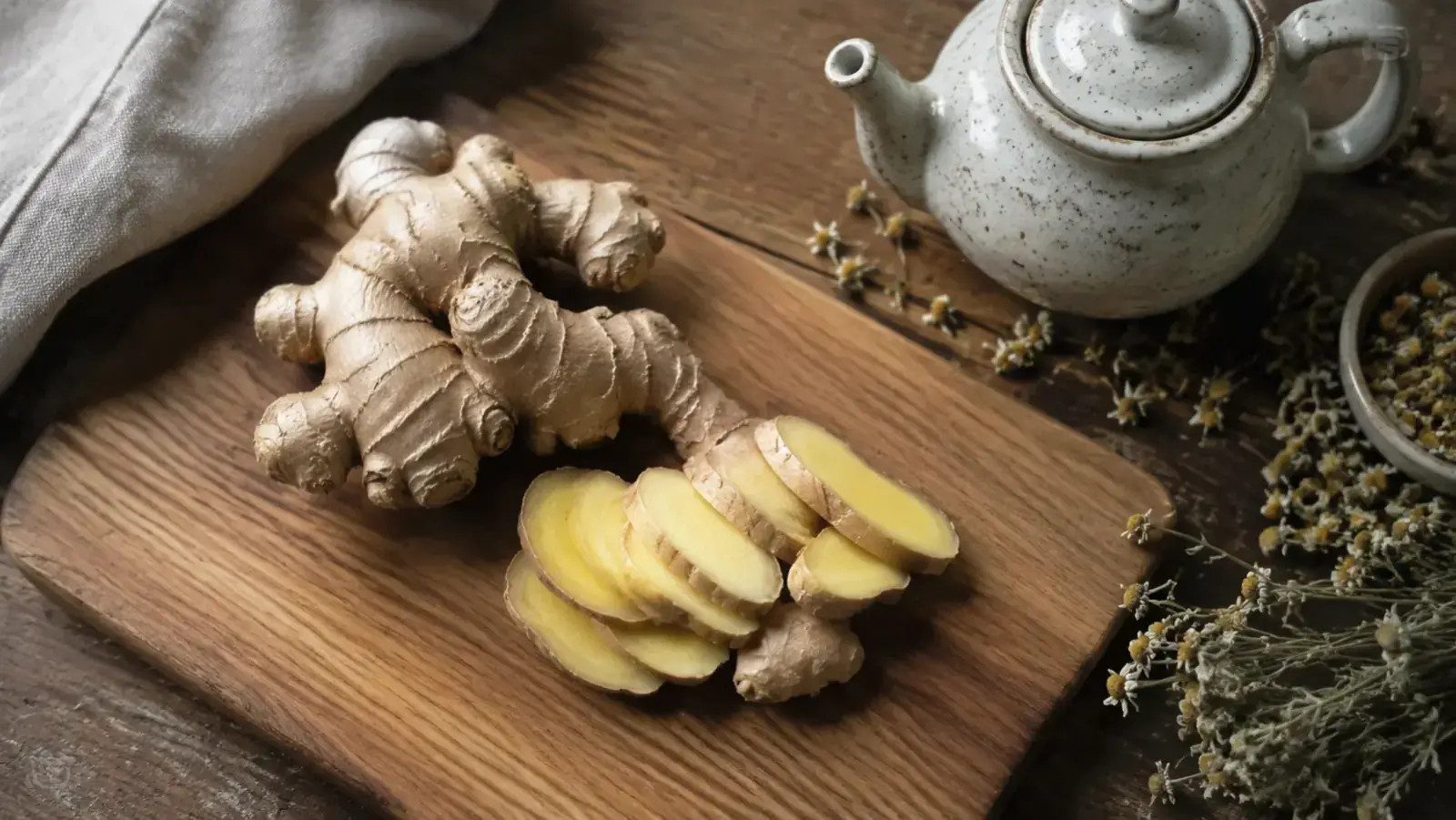
There are two areas where tea genuinely holds its ground. The first is sensory engagement. Heat, aroma, and the slight bite of a good steep have their own value, separate from any active compound. Several researchers studying nausea have noted that the warm liquid itself, independent of gingerol, may play a role in stomach comfort. If you are dealing with queasiness and you need something that feels soothing in the moment, wrapping your hands around a hot mug has an immediacy that a capsule does not. That is not hype. It is a real difference in how the two forms work in practice.
The second advantage of tea is flexibility with other ingredients. A cup of ginger tea can also include a slice of lemon, a few chamomile flowers, or a piece of turmeric root without any additional supplementation step. For people who already have a morning tea ritual and simply want to add ginger to it, brewing from the root is a natural integration. The ritual itself, the intentionality of the preparation, can also improve adherence to a wellness practice in ways that taking a pill from a bottle does not. I have seen this in my own tracking data: days when I prepared my tea mindfully, I logged other healthy habits more often. That is a real behavioral observation, even if it does not show up in a gingerol milligram count.
The question is not which form of ginger is superior in a laboratory. It is which form you will actually take on the morning you slept badly, have a meeting in 20 minutes, and forgot to buy fresh root at the grocery store.
The Gingerol Numbers: What the Label Comparison Actually Shows
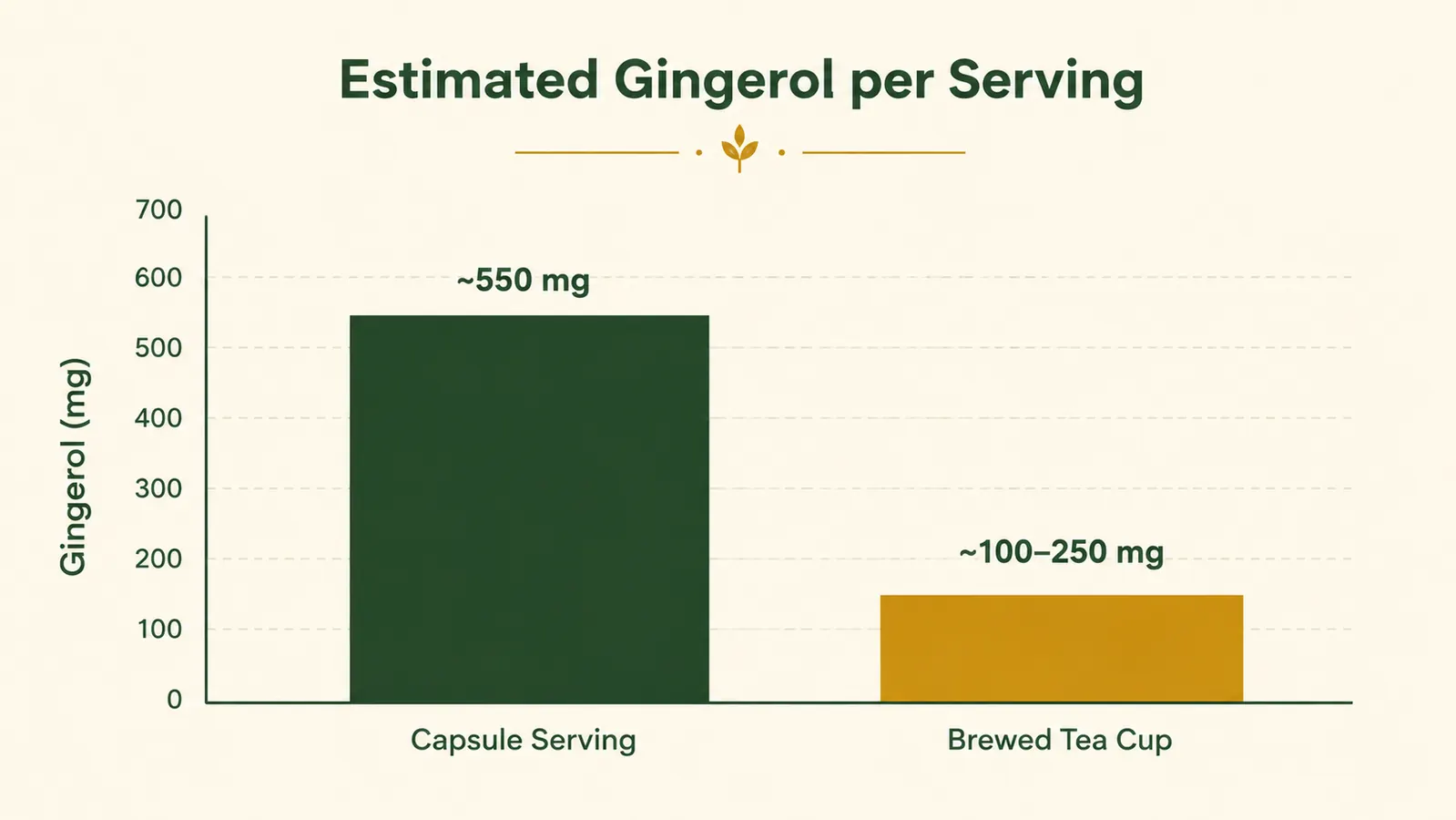
I spent several evenings cross-referencing published estimates of gingerol content in brewed ginger tea against what you can reasonably expect from a capsule. The numbers are genuinely difficult to nail down for tea because of the variable factors I mentioned above, but research estimates typically land in the range of 100 to 250 milligrams of total ginger phenols per 200-milliliter cup brewed from 1 to 3 grams of fresh root steeped for 5 minutes. Steeping longer or using more root can increase that, but there is a ceiling before the taste becomes unpleasant.
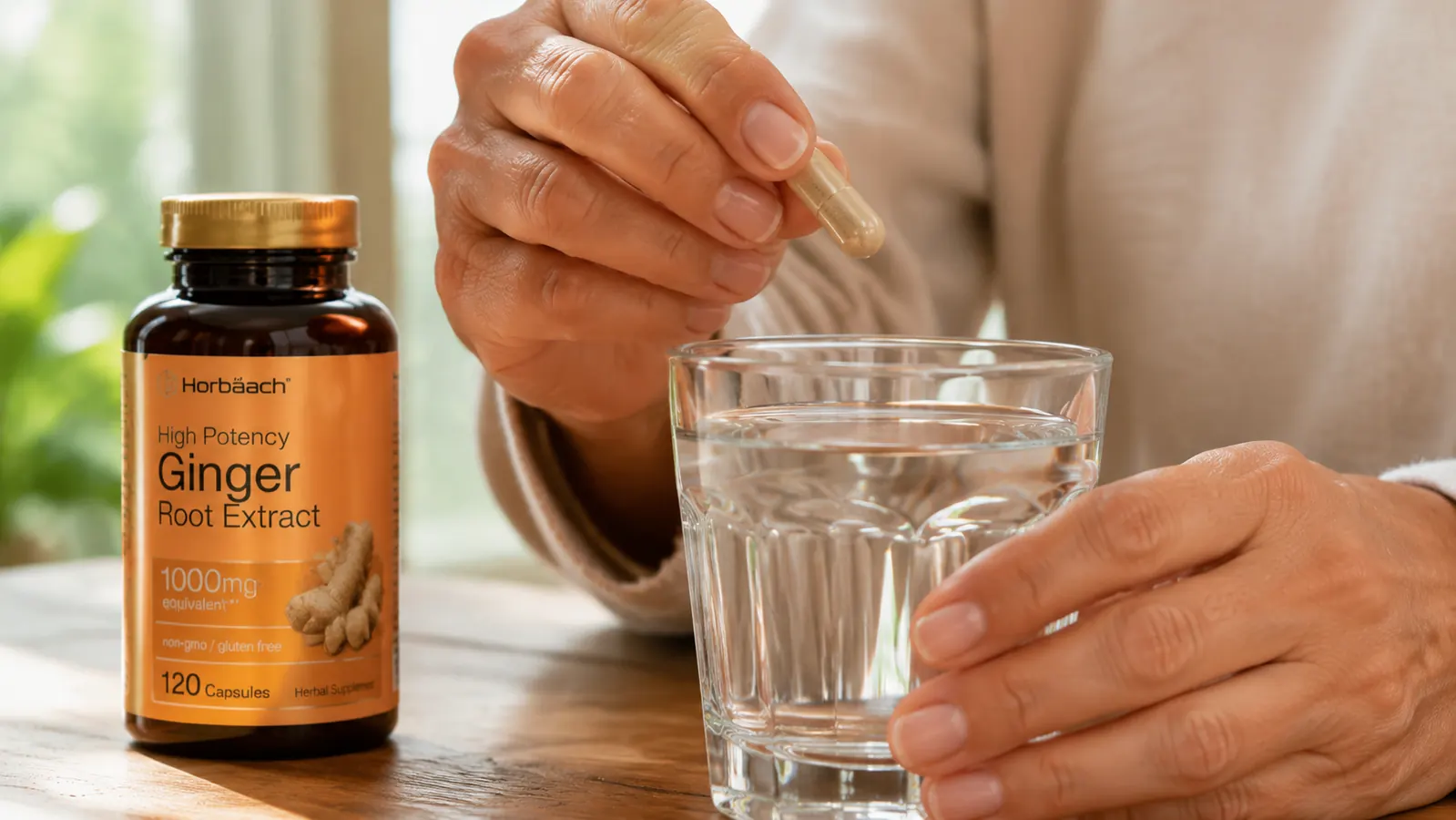
A standardized extract capsule from Horbaach delivers ginger root extract in a concentrated form. The extract ratio means each capsule delivers the equivalent of a larger amount of raw root than you would typically add to a cup of tea. The trade-off is that shogaols, which form during drying and heat, may be present in different proportions than in freshly brewed tea. Neither profile is inherently better. Gingerols and shogaols have overlapping but not identical activity in the research literature. The practical takeaway for daily digestive support is that the capsule is more consistent and, for most people, delivers a reliably effective dose.
Cost Per Day: A Straightforward Calculation
I tracked my spending on ginger over three months. Fresh ginger root at my local grocery store runs between two and three dollars for a knob that lasts about a week if I use it daily for tea. That puts the cost at roughly forty to sixty cents per day before accounting for the times I forgot to buy it, let it mold, or made a weaker cup than intended. The Horbaach 150-capsule bottle at its current price breaks down to under ten cents per serving. Over a 90-day trial, the capsule option saved me a meaningful amount and required zero trips to the produce section. The math is not close.
Where tea can close the gap is if you already have fresh ginger in the kitchen for cooking and are simply using the tail end of the root. In that scenario, the incremental cost of a cup of ginger tea is nearly zero. But if ginger is going into your day purely as a supplement, the capsule wins on cost without a meaningful trade-off in efficacy.
One Note on Blood-Thinning Interactions
This applies to both forms and deserves explicit mention. Ginger has known blood-thinning properties, primarily because gingerols inhibit platelet aggregation. This is not a reason to avoid ginger, but it is a reason to have a conversation with your physician if you are on warfarin, clopidogrel, aspirin therapy, or any other anticoagulant. It is also relevant during pregnancy and in the weeks before surgery. Capsules are not more dangerous here than tea. If anything, tea drinkers may be more casual about their dose because it feels like food rather than a supplement. Both forms carry the same interaction risk, and both deserve the same level of awareness.
Who Should Buy Which
The Horbaach capsules are the right call for anyone who already has a supplement routine, travels with any regularity, wants to know exactly what dose they are taking each day, or has tried the tea ritual and found it too inconsistent to maintain. You get a 150-capsule supply that requires no fresh ingredients, no prep time, and no mug. The 4.6-star rating across more than 7,000 Amazon reviews reflects a user base that includes a lot of people who made exactly this switch from whole root and never went back.
Fresh ginger tea belongs in your routine if you already brew loose-leaf tea in the morning and are looking to add ginger to a ritual you already perform, if you specifically want the sensory and warming effect of a hot beverage, or if you are using ginger root in cooking anyway and want to stretch it into a tea as well. It is also worth keeping around simply because it tastes good. The two approaches are not mutually exclusive. My own routine now includes a daily capsule for consistent baseline support plus an occasional cup of fresh ginger tea when I want the warmth. One handles the dose. The other handles the ritual.
150 capsules of standardized ginger root, no fresh root required.
Horbaach Ginger Root Extract is a straightforward, Non-GMO, gluten-free way to keep your ginger intake consistent whether you are at home, traveling, or just out of fresh root. Over 7,000 reviewers, 4.6 stars.
Amazon Check Today's Price on Amazon →