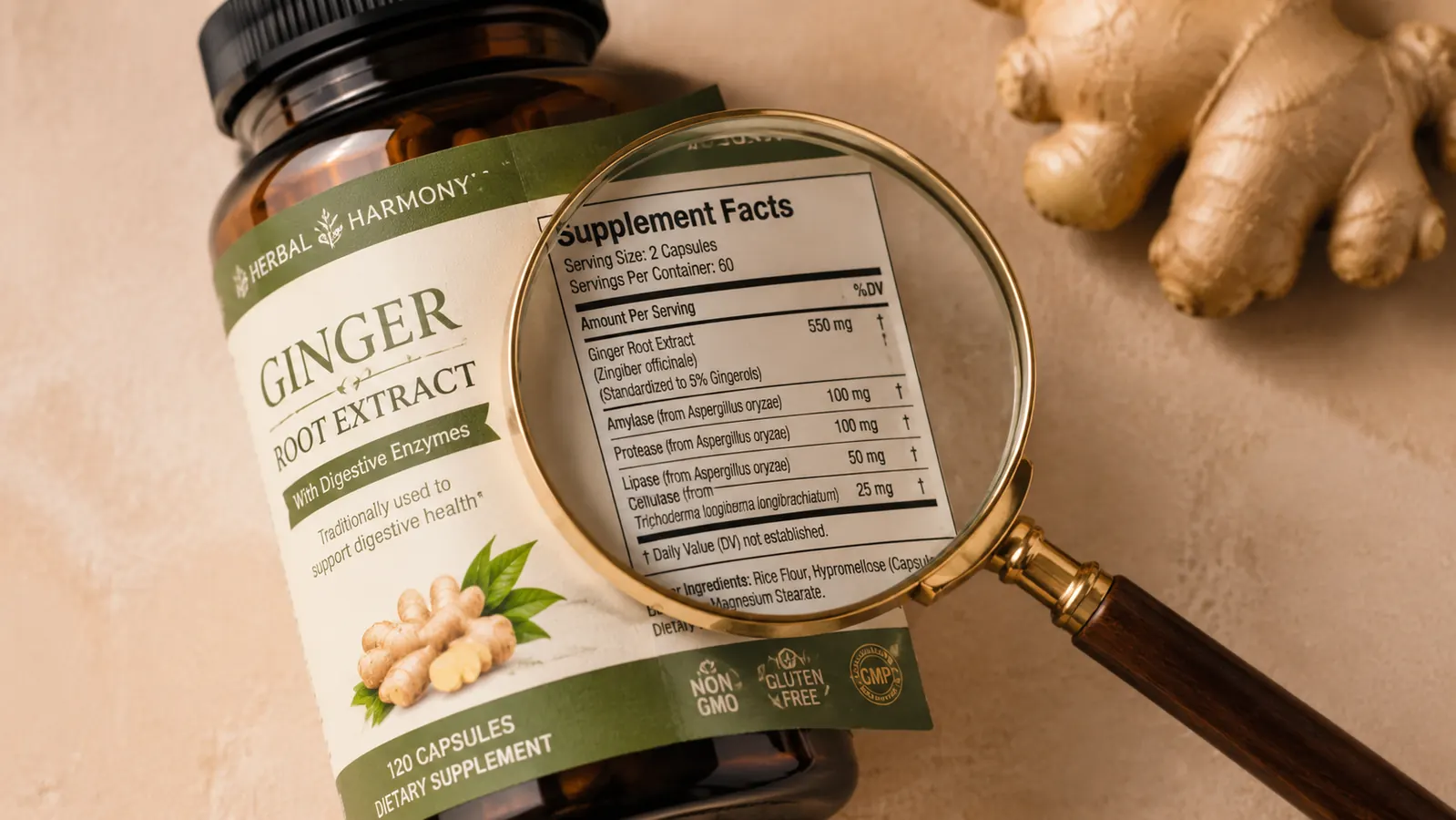
I have a rule when I pick up a new supplement bottle: I read every word on the label before I read a single Amazon review. The Supplement Facts panel, the other ingredients list, the small-print disclaimers at the bottom, all of it. With Horbaach Ginger Root Extract (ASIN B07Z9P38D1, 150 capsules), that reading habit turned up a few things worth talking about openly. This is a product I think many shoppers will buy and some should not. Neither of those statements has anything to do with whether ginger root extract works as a botanical. The research on gingerol and shogaol is real and solid. The question is whether this specific label gives you enough information to know what you are actually taking, and what you should realistically expect in the first 30 days of use.
I want to separate two things upfront: label quality and product safety. This article focuses heavily on label literacy because that is where I think this product is most misunderstood by buyers. But I also cover the safety interactions that most reviews skip entirely, because ginger at extract doses is not a neutral pantry spice. It is a pharmacologically active compound with real interactions. If you are on prescription medication or managing a chronic condition, the section titled 'Who Should Not Start With This Product' is not optional reading.
Good value for a first-time ginger supplement buyer willing to accept label ambiguity. Not the right pick for anyone who needs to verify gingerol concentration or has a prescriber asking questions.
Amazon See It on Amazon →If your stomach is telling you something your brain has been ignoring, a daily ginger extract is one of the more research-backed tools on the botanical shelf.
Horbaach Ginger Root Extract offers 150 capsules of a Non-GMO, Gluten Free traditional herbal formula at one of the lowest price-per-capsule rates in the ginger supplement category. For first-time buyers who want to run their own 30-day experiment, the entry cost here is low enough to make that trial reasonable. Check today's price on Amazon before comparing to alternatives.
Amazon Check Today's Price on Amazon →What '1,500 mg Equivalent' Actually Means on a Ginger Label
This is the number that causes the most confusion in the ginger supplement category, and it appears in various forms across multiple brands. When a label says '1,500 mg ginger root equivalent,' it is telling you about the weight of dried whole ginger root that was processed to produce the concentrated extract in the capsule. It is not telling you the dose of actual extract you are swallowing. The concentration ratio matters enormously. A 4:1 extract means four grams of raw root were used to produce one gram of extract. A 20:1 extract means twenty grams were used. The same '1,500 mg equivalent' claim could come from either concentration, and the resulting gingerol content would be dramatically different.
Horbaach lists 550 mg of Ginger Root Extract per two-capsule serving. The label on my bottle does not include a standardization percentage or a concentration ratio. That 550 mg figure tells you the mass of extract in the capsule. It does not tell you how concentrated that extract is, what percentage of it is 6-gingerol or 6-shogaol, or how the extraction was performed. For context, premium ginger extracts from brands like Solgar typically specify a 5% gingerol standardization, meaning you know that 5% of the extract weight is the active phenolic compound. Without a standardization figure, you cannot calculate the equivalent gingerol dose, which is the number most ginger researchers are actually referencing in clinical literature.
None of this means Horbaach's extract is weak or ineffective. It means the label does not give you enough information to make that determination. That is a label transparency problem, not necessarily a product quality problem. The distinction is important and worth holding onto as you shop.
The Capsule Shell: Gelatin Source and What It Means for Different Buyers
I checked the other ingredients list carefully on the bottle I purchased. The capsule shell on the version I received was gelatin-based, not vegetable cellulose. Gelatin capsules are derived from animal connective tissue, typically bovine or porcine. That makes this product unsuitable for vegetarians, vegans, and buyers who follow halal or kosher dietary practices without knowing the specific sourcing. The front panel on my bottle reads 'Traditional Herbal Formula' without specifying capsule type, and the product title on Amazon does not flag gelatin as an ingredient. You have to read the other ingredients list on the physical label to find it.
This is not a criticism of gelatin capsules themselves. They are industry-standard and perfectly effective for most buyers. The issue is discoverability. A buyer who follows a plant-based diet or has dietary restrictions related to animal-derived ingredients may not catch this unless they specifically look for it. I am flagging it because I have seen this question come up repeatedly in the Amazon review section for this product, and I think it belongs in the body of any thorough review rather than buried in user Q-and-A.
If a vegetarian or vegan capsule matters to you, NOW Foods Ginger Root 550 mg uses a vegetarian capsule shell and lists it explicitly on the label. That is one specific case where the label legibility difference between these two brands has a direct practical impact on your purchase decision.
Realistic 30-Day Expectations: What the Research Suggests and What It Does Not
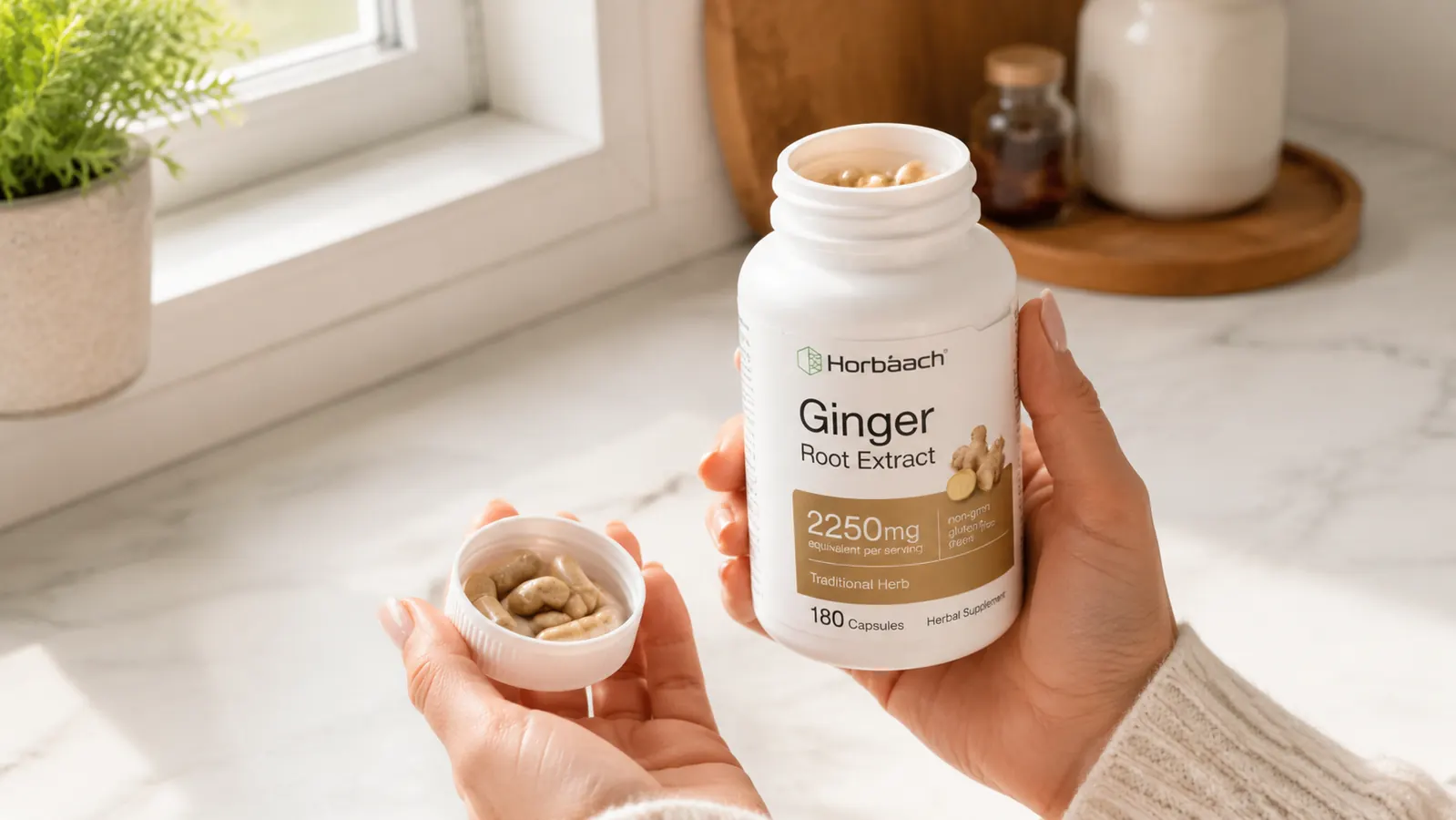
I want to give you a fair picture of what a single month of daily ginger root extract supplementation may and may not produce, because the review section for this product includes some claims that go well beyond what the research supports. Ginger's most studied applications at supplemental doses include support for gastric motility (the speed at which the stomach empties), reduction in nausea severity in certain populations, and modest antioxidant activity from gingerol and shogaol compounds. The motility research is reasonably consistent. The nausea research is better in some populations than others. The antioxidant research is real but less clinically specific.
What you should not expect in 30 days: dramatic weight changes, joint transformation, or any outcome that a supplement company cannot legally claim on its label. I note this because ginger supplements sometimes get conflated with anti-inflammatory claims that are largely drawn from curcumin research applied loosely to the broader 'warming botanicals' category. Ginger contains gingerol and shogaol, which have demonstrated antioxidant properties in cell and animal studies. The translation to human outcomes at the doses in a standard daily capsule is more modest and less certain.
For digestive comfort support, 30 days at two capsules per day with a consistent meal schedule is a reasonable trial window. If you are tracking your own response, note the days you take it and the days you do not, what you eat, and any changes in your typical post-meal sensation. Give it a full month before drawing conclusions. A supplement that works through gastric motility mechanisms tends to show results that are gradual and cumulative rather than immediate and dramatic.
The label says '550 mg of Ginger Root Extract' but does not say how concentrated that extract is. Without a gingerol standardization percentage, you are trusting the brand's process without any ability to verify the active-compound dose you are actually taking.
How Horbaach Compares to Three Other Amazon Ginger Brands
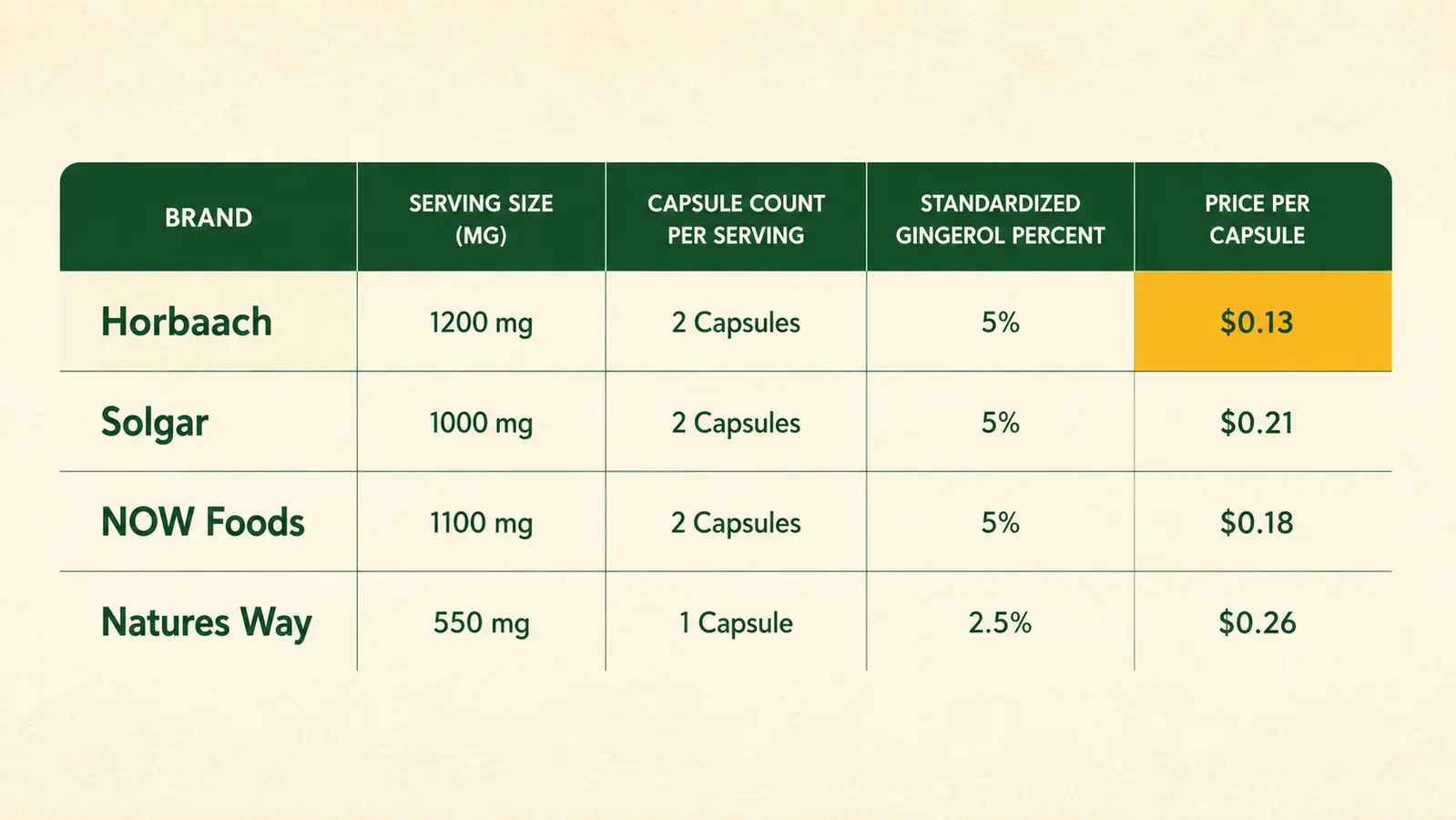
I have put this product alongside three alternatives that occupy similar shelf space on Amazon. These are not lab-tested comparisons. They are label-to-label comparisons, which is the only methodology available to a consumer who does not have access to third-party assay results.
Solgar Ginger Root Extract includes standardization language and has been around longer as a botanical brand with more visible documentation. Its cost per capsule is higher than Horbaach, sometimes meaningfully so depending on the size you buy. If gingerol percentage transparency is the deciding factor for you, Solgar clears a bar that Horbaach does not currently clear on its label. NOW Foods Ginger Root 550 mg matches Horbaach's serving size and uses a vegetarian capsule, as I noted above. It is priced higher per capsule but brings label clarity that Horbaach lacks. Nature's Way Ginger Root explicitly cites the plant part (root, not rhizome blend) and has undergone Tru-ID botanical identity verification, which is a third-party authentication program. Again, higher cost, meaningfully better label documentation.
What Horbaach wins on is price. At the current price for 150 capsules, the per-capsule cost is lower than any of the three alternatives I just listed. If your primary constraint is budget and you want to build a daily ginger habit before committing to a premium product, that cost gap is real and not trivial. But I would call Horbaach the entry-level option in this category, not the definitive one. For a deeper look at how ginger capsules stack up against ginger tea from a dose and consistency standpoint, the comparison piece on ginger root capsules versus ginger tea for digestive support covers that tradeoff in detail.
Third-Party Testing: What Exists and What Does Not
I searched Horbaach's website and the Amazon listing for any reference to third-party testing certificates, USP verification, NSF certification, or Informed Sport testing. I did not find any publicly accessible documentation of independent assay results for this product. That does not mean no testing exists internally. Many supplement brands conduct in-house quality control and simply do not publish the results externally. But the absence of a public certificate of analysis is a meaningful data point for buyers who use third-party verification as part of their purchase criteria.
Horbaach as a brand occupies a specific market position: high volume, competitive price, broad label certification (Non-GMO, Gluten Free, no artificial flavors), but minimal published documentation beyond what appears on the physical packaging. That is a coherent and legal approach to supplement manufacturing. It just means that a buyer who requires verified active-compound quantification from an independent lab needs to look elsewhere in this category.
Who Should Not Start With This Product

I am covering this section last but it is not optional reading if any of the following applies to you. Ginger contains compounds that inhibit thromboxane synthesis and may reduce platelet aggregation. In practical terms, this means daily ginger supplementation at extract doses may amplify the effects of blood-thinning medications. If you take warfarin, clopidogrel, apixaban, rivaroxaban, daily aspirin therapy, or any prescription anticoagulant, you need a direct conversation with your prescriber before starting any ginger supplement. This is not a Horbaach-specific warning. It applies to all standardized ginger root extract products regardless of brand or dose.
Gallbladder conditions represent a second category of concern. Ginger stimulates bile secretion and bile flow. If you have known gallstones, whether symptomatic or discovered incidentally on imaging, increased bile flow can trigger episodes of pain or discomfort. This interaction is under-discussed in consumer review spaces but well-documented in clinical literature on ginger. If you have any gallbladder history, ask your doctor before starting a ginger supplement at extract doses.
Pregnancy is a third category. Ginger has traditionally been used for first-trimester nausea support and several small studies suggest modest safety at low doses in that application. However, at extract doses, particularly beyond the first trimester, the research on safety is less settled. Anyone who is pregnant should speak with their OB before using any ginger supplement at extract concentrations, including this one. And people with GERD or a history of acid reflux should be aware that ginger's effect on gastric acid secretion can occasionally worsen reflux symptoms in susceptible individuals, particularly if taken on an empty stomach.
Pros
- One of the lowest price-per-capsule options in the ginger supplement category on Amazon
- Non-GMO and Gluten Free certifications make it accessible to a wide range of buyers with common dietary restrictions
- 150-capsule count is generous and provides a meaningful trial window without frequent reordering
- No artificial flavors, colors, or unnecessary fillers in the other ingredients list
- 4.6-star rating across more than 7,000 verified Amazon reviews suggests consistent real-world satisfaction
- Traditional herbal formula framing: the label does not make overclaimed health promises that could mislead buyers
Cons
- No standardized gingerol percentage on the label: you cannot verify the active compound dose per serving
- Gelatin capsule shell is not flagged prominently, making it easy to miss for vegetarian or dietary-restriction buyers
- No publicly available third-party testing certificate or certificate of analysis
- No concentration ratio disclosed: the relationship between raw root weight and extract potency is opaque
- Label transparency is meaningfully behind premium alternatives like Solgar and NOW Foods in every documentation category except price
Who This Review Is Written For
Horbaach Ginger Root Extract is a reasonable starting point for someone who reads ingredient labels but is willing to accept the ambiguity of an unstandardized extract in exchange for a low barrier to entry. If you have never taken a ginger supplement before and you want to find out whether a daily capsule habit produces any noticeable change in your digestive comfort or nausea patterns, this product's price point makes a 30-day self-experiment financially low-stakes. Buy one bottle, take two capsules per day with your largest meal, track what you notice, and then decide whether to continue or step up to a more fully documented extract. That is a sound approach for a first-time buyer.
If you are already supplementing with botanical extracts and you have reached the point where you want to know your exact gingerol dose per serving, this product is not going to give you that. The label simply does not provide it. Step up to Solgar or NOW Foods if that level of specificity matters to your protocol. And if you are taking prescription medications or managing a chronic condition, read the safety section above and talk to your doctor before starting any ginger supplement. Ginger earns its place on the wellness shelf, but it does its best work when the person taking it knows what they are actually getting. For a full account of what a multi-month trial with this specific product looks like from a tracking standpoint, the companion article at Horbaach Ginger Root Extract review with six months of usage data covers the week-by-week results in detail.
Before you spend more on a premium ginger brand, find out whether a daily ginger habit makes a difference for you at all.
Horbaach Ginger Root Extract is the lowest-friction way to run that 30-day experiment. Non-GMO, Gluten Free, 150 capsules per bottle. If you respond well and want more label detail after your trial, you can step up to a standardized extract from there. Check today's price on Amazon to see if it still makes sense as a starting point.
Amazon Check Today's Price on Amazon →