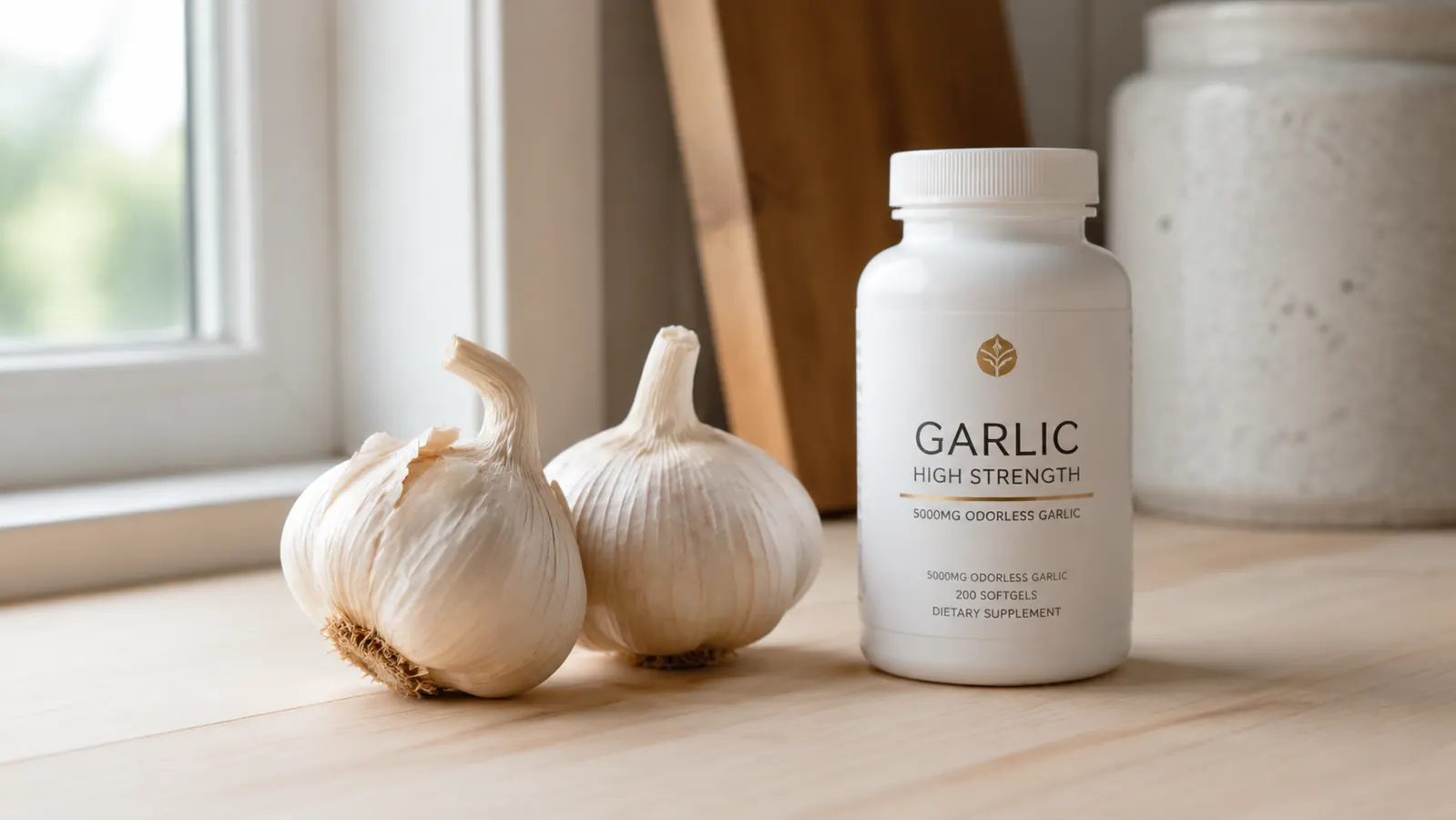
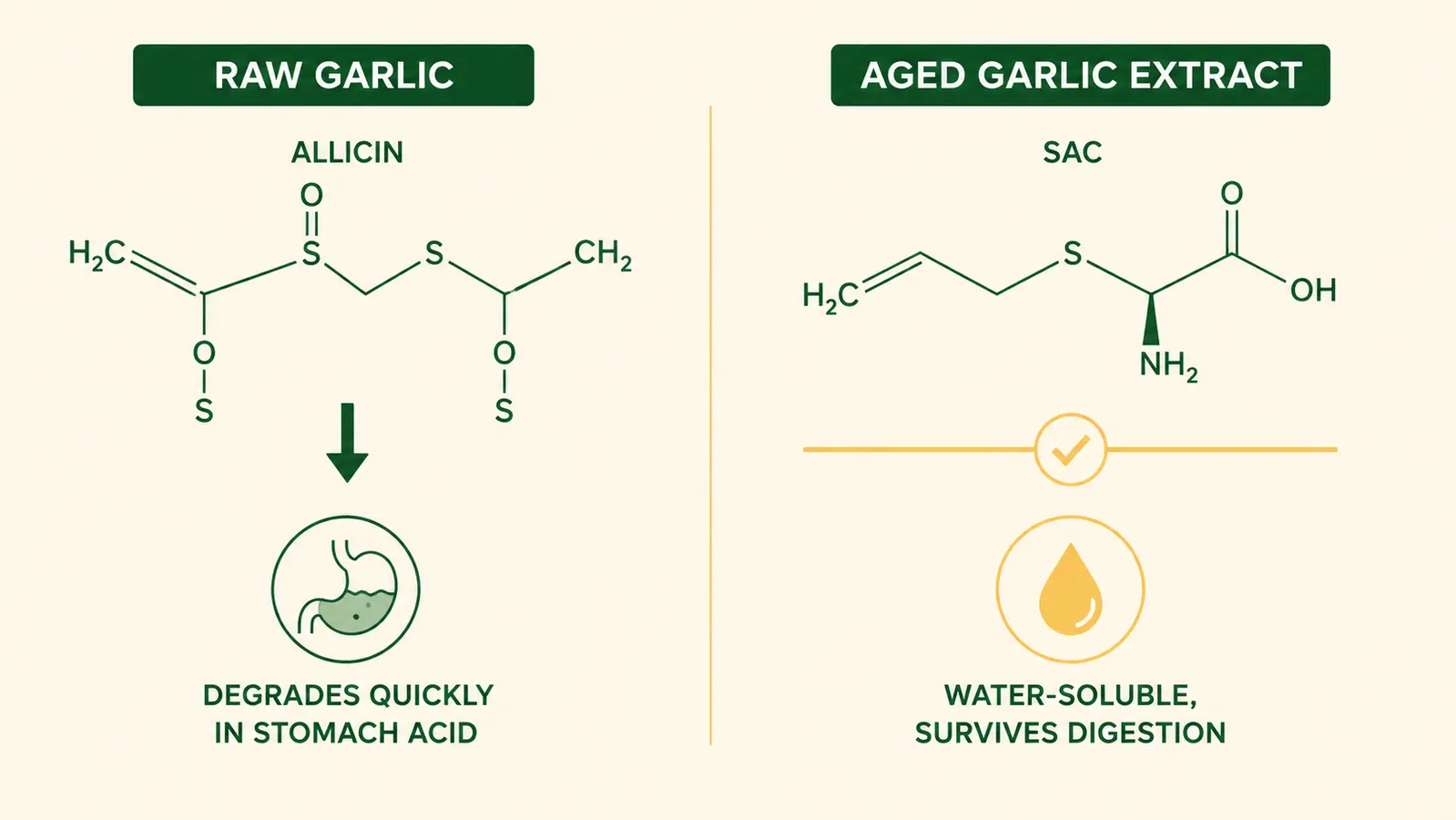
I spent three weeks eating two raw garlic cloves every morning before I finally admitted to myself that the breath issue was not going away. My husband started sleeping with the window open. My coworkers developed sudden enthusiasm for video calls. And here is the part that actually bothered me as a researcher: I was not even sure the allicin was surviving the trip from my mouth to my bloodstream intact. Raw garlic gives you a dramatic burst of allicin the moment you crush it, but allicin is volatile. It degrades fast, it reacts badly with stomach acid, and it announces itself to every person within six feet. That is when I went back to the literature on aged garlic and found that the aging process trades allicin's flashy entrance for something quieter and, in several important ways, more useful: S-allyl cysteine, a stable water-soluble organosulfur compound that survives digestion and, crucially, does not make you smell like you are marinating yourself.
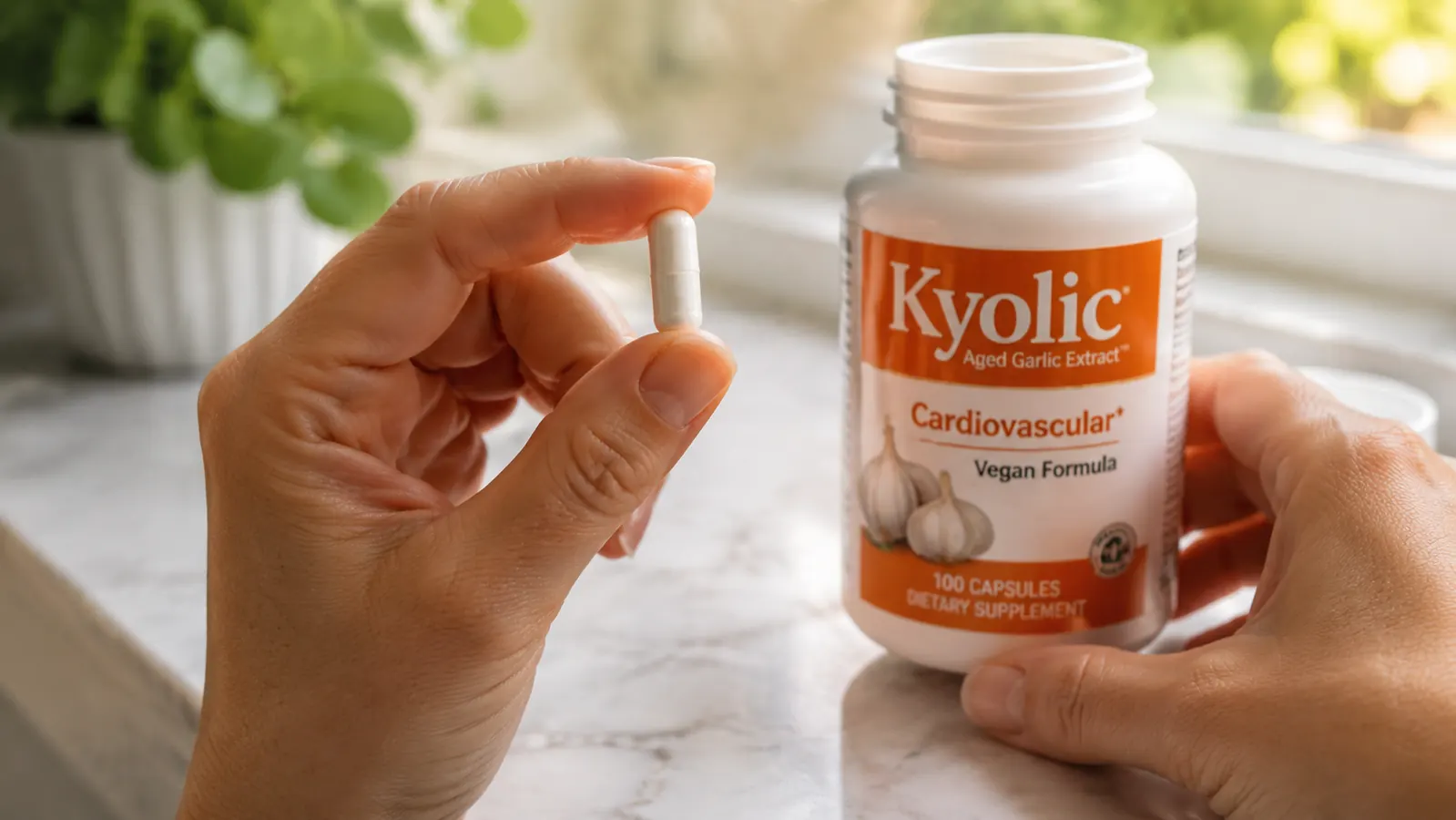
This article compares Kyolic Aged Garlic Extract Formula 100, which has been the standard-bearer for aged garlic supplements since the 1970s, against raw garlic and standard odorless garlic tablets. The short answer: for daily immune and antioxidant support, aged garlic's compound profile gives it a meaningful edge over raw garlic on consistency, tolerability, and research backing. The longer answer involves some chemistry worth understanding before you buy anything. (If you are on blood thinners, pregnant, or taking prescription medications that interact with garlic, talk to your doctor before adding any garlic supplement to your routine. Garlic has measurable antiplatelet effects at meaningful doses.)
| Feature | Kyolic Aged Garlic Extract Formula 100, Cardiovascular Health, 300 Capsules | Alternative |
|---|---|---|
| S-allyl cysteine (SAC), S-allyl mercaptocysteine (SAMC), fructooligosaccharides | Allicin (raw), alliin (odorless tablets, converted to allicin inconsistently) | |
| SAC is water-soluble and stable through digestion | Allicin degrades in stomach acid; absorption varies widely | |
| Genuinely odorless aging process eliminates sulfenic acid precursors | Raw garlic: significant breath and body odor. Odorless tablets: mild but present | |
| Kyolic controls the 20-month aging process; SAC content is documented | Raw garlic varies by variety, freshness, and how it is crushed or chewed | |
| Well-tolerated in most users, including on an empty stomach | Raw garlic causes GI irritation in many people, especially fasted | |
| 300 capsules, shelf-stable, no prep | Raw cloves require crushing and immediate use; tablet forms are portable | |
| Kyolic has appeared in peer-reviewed studies on immune markers, NK cell activity, and antioxidant status | Allicin has a strong research record too, but bioavailability from supplements is less consistent | |
| 300 capsules, mid-range for a standardized botanical | Raw garlic: very low cost. Standard odorless tablets: budget-priced but lower reliability |
Where Kyolic Aged Garlic Extract Wins
The biggest advantage of aged garlic is compound stability. Allicin, which forms when fresh garlic is crushed and the enzyme alliinase contacts alliin, is genuinely potent but genuinely fragile. Multiple studies have shown that allicin begins degrading within hours of formation, and that stomach acid degrades it further. When you take a standard odorless garlic tablet that claims allicin potential on the label, what you are buying is alliin plus the hope that enzymatic conversion happens somewhere useful in your GI tract. The research suggests this conversion is inconsistent. Kyolic bypasses the allicin step entirely. During the 20-month cold-aging process, alliin is converted into S-allyl cysteine and related water-soluble organosulfur compounds that are chemically stable. SAC has been shown in multiple pharmacokinetic studies to have a bioavailability above 98% in animal models, and it survives the acidic stomach environment that defeats allicin.
The immune and antioxidant research on Kyolic specifically (not just garlic generically) is also more consistent than I expected when I started digging. A study published in Clinical Nutrition found that Kyolic aged garlic extract supplementation was associated with increased NK cell and gamma-delta T cell activity in adults with cold and flu symptoms, compared to placebo. A separate paper in the Journal of Nutrition documented reduced oxidative stress markers after 12 weeks of aged garlic supplementation. These are not the sweeping disease-prevention claims you see on wellness influencer pages. They are modest, specific, and reproducible, which is exactly what I look for. For a supplement that fits the immune and antioxidant support category, the SAC research record is solid.
If Raw Garlic Breath Is the Tax You're Paying for Immune Support, There's a Smarter Way
Kyolic Aged Garlic Extract Formula 100 delivers 300 capsules of standardized aged garlic, odorless and well-tolerated. It is the version with the deepest research record in its category.
Amazon Check Today's Price on Amazon →Where Raw Garlic Wins
Raw garlic does have a legitimate case. First, cost: a head of garlic costs almost nothing, and if you can tolerate two or three freshly crushed cloves per day without digestive upset and without a social life, the allicin concentration you get from fresh-crushed garlic is genuinely high. The key word is fresh-crushed. Chopped garlic left to sit in olive oil loses allicin potential within hours. Whole cloves swallowed without crushing do not activate alliinase at all. But if you crush it, wait ten minutes for enzymatic conversion to complete, and eat it immediately, you are getting a substantial allicin dose. Second, raw garlic also provides inulin-type fructans that feed beneficial gut bacteria, which aged garlic's processing reduces somewhat. If prebiotic fiber is a priority in your routine, raw garlic has a nutritional complexity that a capsule cannot fully replicate.
Standard odorless garlic tablets occupy a middle ground that is not, in my reading, all that attractive. They typically use heat or other processing to destroy the pungent sulfenic acid compounds, which does eliminate odor, but it also reduces allicin potential and does not create SAC. You end up with a supplement that lacks the volatility of raw garlic and the stability of aged garlic. I have not found convincing research on standard odorless garlic tablets that matches either of the alternatives in this comparison. If you are choosing between the three, raw garlic and Kyolic aged garlic extract are both more defensible choices than the middle option.
The aging process does not just remove the smell. It transforms the chemistry. SAC is not a weaker version of allicin. It is a different compound with its own bioavailability profile, and the research suggests that profile is favorable for daily supplement use.
The Chemistry Behind the Aging Process
Kyolic's manufacturing process stores organic raw garlic at room temperature for 20 months. During this time, allicin and its precursors undergo a series of reactions that produce a family of stable organosulfur compounds including S-allyl cysteine, S-allyl mercaptocysteine, and diallyl polysulfides. The result is a compound profile that does not exist in fresh garlic or in any other garlic supplement format. This is not a marketing distinction. The compound profile difference has been documented analytically and is the reason most of the garlic-specific clinical research uses either Kyolic or a defined allicin extract rather than raw garlic powder, because raw garlic is too variable to test reliably.
S-allyl cysteine also has a meaningful antioxidant mechanism of its own. It appears to support glutathione synthesis, which is one of the body's primary intracellular antioxidant pathways. This is distinct from allicin's mechanism, which works more through direct antimicrobial and free-radical scavenging activity. Neither is superior in an absolute sense, but SAC's glutathione-supporting role is particularly relevant for antioxidant support framing, and it is the angle that the Kyolic research has explored most consistently.
Tolerability and Daily Use Reality
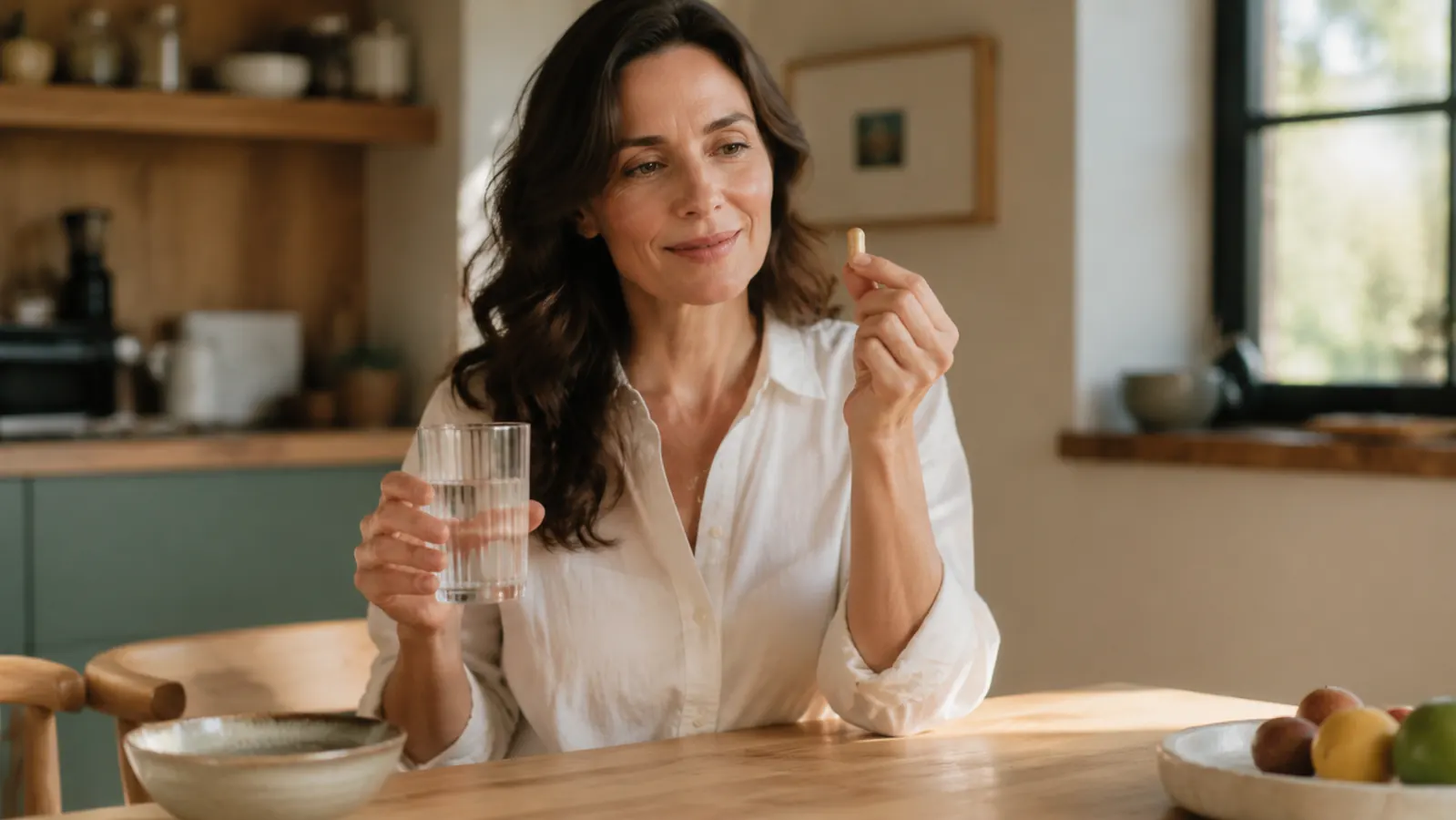
I take two Kyolic Formula 100 capsules in the morning with breakfast, which is the dose range used in most of the published research I reviewed. I have had zero GI issues over four months of daily use, including on mornings when I took them before my coffee was ready and my stomach was essentially empty. That is categorically different from my three-week raw garlic experiment, which produced consistent stomach discomfort by day five. People with sensitive stomachs or GERD often report that raw garlic is a direct irritant. Aged garlic's water-soluble compounds skip most of that pathway.
The odorless claim, which I was frankly skeptical of, holds up in my experience. I have not had a single comment from my husband or colleagues since switching, and I checked specifically. My breath does not smell like garlic at any point in the day. This matters more than it might seem in a research context: supplement regimens you can actually maintain produce better outcomes than regimens that are theoretically superior but practically unsustainable. If the raw garlic breath was going to make me stop after three weeks, which it nearly did, then the supplement with the slightly different compound profile that I can actually take every day wins the practical test.
Label Literacy: What to Check Before You Buy
If you are comparing garlic supplements, look for two things on the label. First, does it specify aged garlic extract and name S-allyl cysteine as a documented compound? Not all products labeled aged garlic have the same aging duration or the same resulting compound profile. Kyolic's 20-month aging process is documented and has been independently verified. Generic aged garlic products with shorter aging times may have a different SAC concentration. Second, avoid products that list allicin yield or allicin potential as the primary measure of potency for an aged garlic extract. Those are meaningful metrics for fresh garlic preparations but are not directly relevant to the aged garlic compound family. If a product is leading with allicin yield claims and also claiming to be odorless, that is a label inconsistency worth questioning. True aged garlic supplements should not be making high allicin claims, because that is not what the aging process produces.
Who Should Buy Kyolic Aged Garlic Extract Formula 100
Kyolic Formula 100 is a strong fit for people who want a consistent, research-backed garlic supplement they can take daily without tracking their breath or managing GI side effects. It is particularly well-suited for anyone who has already tried raw garlic tablets and found the tolerability or odor to be a deal-breaker. The 300-capsule count makes it a reasonable value at its price point when you calculate the per-serving cost over several months. It also stacks cleanly with other botanicals in this niche: I currently take it alongside my turmeric curcumin supplement in the morning with no interaction concerns at standard doses, though I note this is a personal choice and you should discuss any supplement stacking with your doctor if you are on prescription medications.
It is less obviously the right choice if you are primarily interested in the prebiotic fiber components of fresh garlic, if you are extremely cost-sensitive and have no tolerability issues with raw cloves, or if your primary interest is in allicin specifically rather than the aged garlic compound family. For those situations, raw garlic from the kitchen, used correctly, is a reasonable and much cheaper option. Just crush it, wait ten minutes, and accept the social consequences.
Kyolic Formula 100: 300 Capsules of the Aged Garlic Extract With the Deepest Research Record
Standardized S-allyl cysteine, genuinely odorless, well-tolerated at the doses used in published studies. A 4.7-star rating across 7,076 reviews suggests Maya is not the only one who kept the bottle on the shelf.
Amazon Check Today's Price on Amazon →